What Should You Not Clean Wood With? Products to Avoid
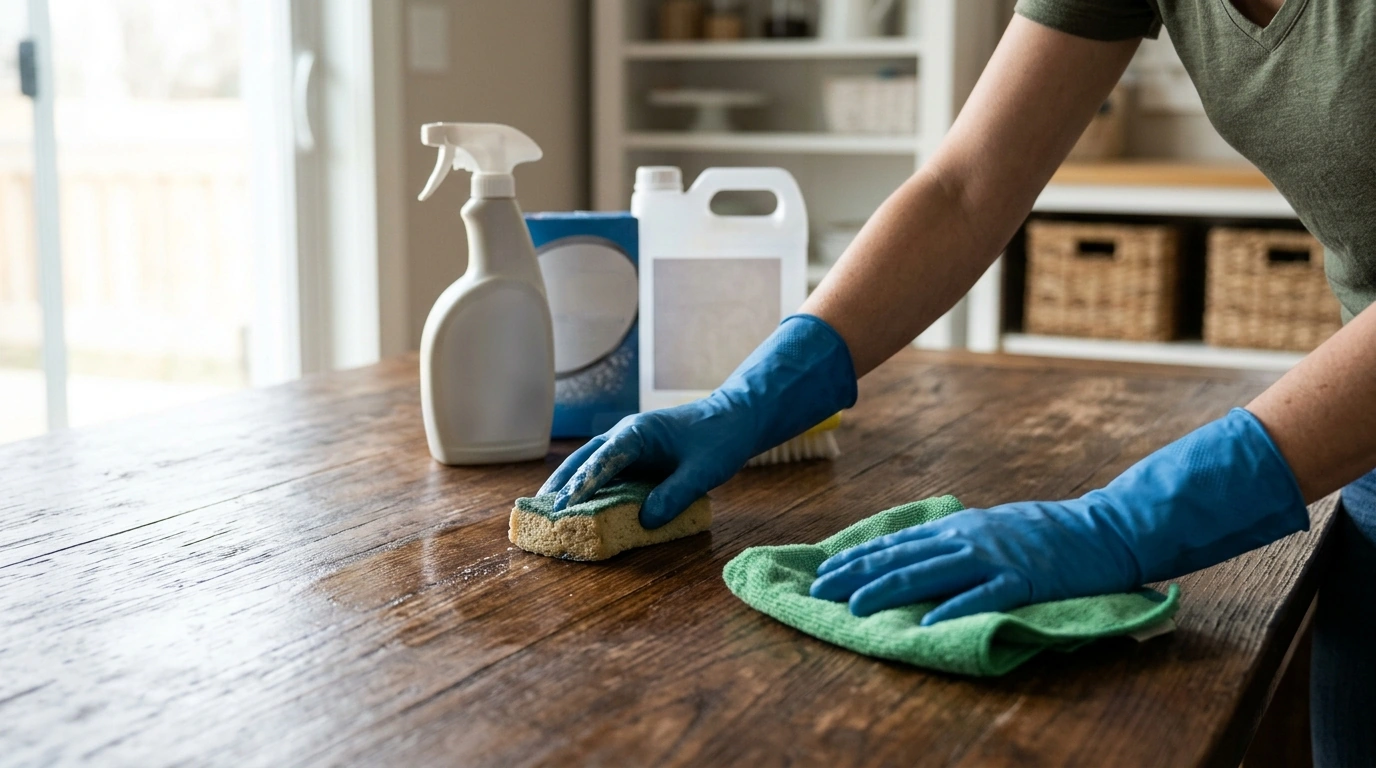
What should you not clean wood with?
Do not clean wood furniture with harsh chemicals, abrasive scrubbers, steam, or excess water. These can scratch the finish, leave cloudy spots, or cause wood to swell. We recommend starting with the gentlest method: a soft, dry or slightly damp cloth.
The finish matters as much as the wood itself. A cleaner that works on a sealed surface may damage an oiled, waxed, painted, or unfinished piece. When you are unsure, test your cleaning method on a hidden area first.
Which cleaning products can damage wood?
Bleach, ammonia, and harsh household cleaners
Avoid bleach, ammonia, oven cleaner, and strong all-purpose sprays unless the furniture’s care instructions specifically permit them. These products can discolor wood or strip and dull its protective finish. Disinfectant wipes can also contain ingredients that affect the finish, so they are not our first choice for routine cleaning.
Vinegar and acidic mixtures
Vinegar and lemon juice are often suggested as natural cleaners, but their acidity can dull or damage some finishes. We recommend leaving them out of your regular wood-care routine rather than relying on a homemade mixture.
Abrasive powders and rough tools
Skip scouring powders, steel wool, and abrasive sponges for everyday cleaning. They can leave fine scratches or remove the finish, even when the surface looks sturdy. Use a soft microfiber cloth instead, and lift debris gently rather than scrubbing hard.
Excess water and steam
Do not soak wood, spray liquid directly onto it, or use a steam cleaner. Moisture can enter seams and damaged areas, leading to swelling, warping, or lifted veneer. If you need a damp cloth, wring it out well and dry the surface promptly with a second cloth.
What can you use for everyday cleaning?
Dust with a soft, dry microfiber cloth. For a sealed surface with fingerprints or light grime, use a cloth lightly dampened with water, then dry the area. For a more stubborn mess, a small amount of mild dish soap diluted in water may help; wipe away any residue with a barely damp cloth and dry immediately.
For more ways to care for finishes and address marks, see our guide to wood furniture care.
FAQ
How often should you dust wood furniture?
Dust wood furniture about once a week with a soft, dry microfiber cloth, or more often if dust builds up quickly. Regular dusting helps keep particles from being rubbed into the finish.










Leave a comment