Wood Furniture Care: Clean, Protect, Fix Common Marks
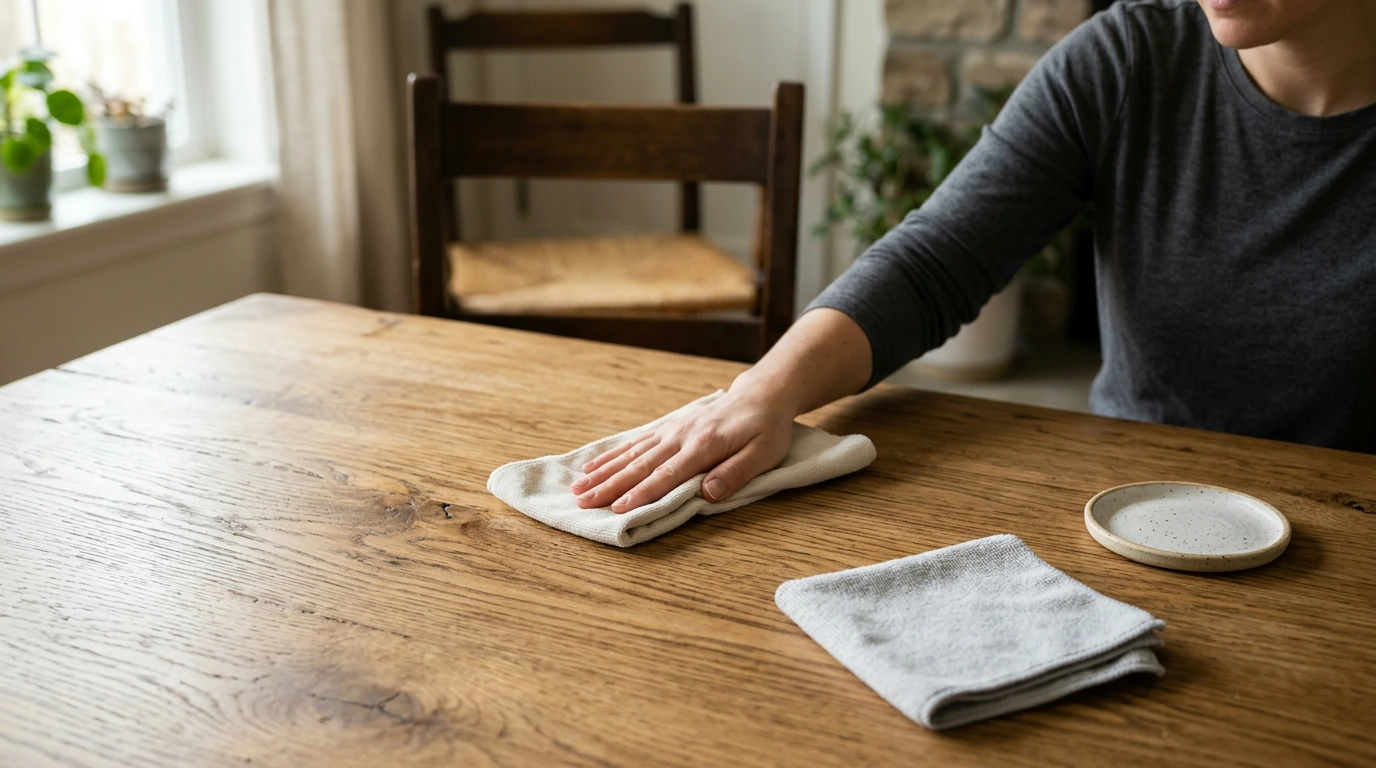
A Simple, Confident Routine for Cleaning and Caring for Wood Furniture (Without Guesswork)
Wood furniture lasts when it’s cared for like the living material it is: protected from grit, moisture swings, heat, and harsh chemicals. Our team put together this routine so you can clean what’s there (the finish), avoid common mistakes (over-wetting and over-polishing), and know what to do next when a problem pops up. If you want a printable workflow with checklists and quick mini-tutorials, you can grab our Cleaning and Caring for Wood Furniture (digital download guide, checklist, and step-by-step tutorial).
Start with the basics: what wood finishes need most
Most everyday wood furniture is protected by a clear topcoat (often lacquer, varnish, or polyurethane). That’s good news: your job is usually to clean the finish without pushing moisture or cleaner down into seams, joints, or veneer edges.
- Dust isn’t harmless. Tiny particles behave like sandpaper. Gentle, frequent dusting keeps a finish from slowly turning hazy.
- Moisture and heat are the fastest troublemakers. Coasters, trivets, and placemats prevent rings and heat marks better than any “miracle” polish.
- Less product, more technique. Soft cloths, light pressure, wiping with the grain, and a dry follow-up pass beat heavy sprays that leave buildup.
- Clean the finish—don’t soak the wood. If liquid can pool, it can migrate into corners and create cloudiness or swelling.
Quick care schedule you can actually stick to
| When | What to do | Tools | Avoid |
|---|---|---|---|
| Daily / as needed | Dry dust with the grain; remove crumbs and grit before wiping | Microfiber cloth or soft cotton cloth | Dry paper towels on delicate finishes; scrubbing in circles |
| Weekly | Damp-wipe for fingerprints, then immediately dry | Cloth lightly dampened with water; second dry cloth | Letting water sit; soaking corners and seams |
| Monthly | Check for sticky spots and product build-up; spot-clean and buff | Soft cloth; mild solution if needed (per finish-safe guidance) | All-purpose degreasers; heavy silicone polishes |
| Seasonally | Refresh protection habits: pads, coasters, humidity checks; address small scratches early | Felt pads; coasters; touch-up supplies for minor marks | Ignoring wobble/loose hardware that causes finish cracks |
The safest cleaning method (and when to step it up)
When you’re unsure what finish you’re dealing with (or you’re cleaning an older piece), stick to the least aggressive method first.
- Remove loose grit first. Dust dry with the grain so particles lift away instead of dragging across the surface.
- Use a barely damp cloth for smudges. Wring the cloth well; wipe in long strokes with the grain.
- Dry immediately. Follow with a second clean cloth to prevent water haze and keep moisture out of seams and joints.
When to step it up: If you’re seeing kitchen grease film, hand-oil smears, or old polish residue, move to a finish-appropriate cleaner and work in a small, controlled area. Always spot-test first—especially on antiques, veneers, or anything with an unknown finish.
If you want a faster, no-second-guessing workflow, our team laid out a start-to-finish routine (including spot-test steps and checklists) in the Cleaning and Caring for Wood Furniture digital download.
Common furniture problems and the “what to do next” path
Cloudy white rings (often moisture trapped in the finish)
Start by stopping the cause: use coasters immediately. Then try the gentlest approach first—dry dust, then a barely damp wipe followed by a dry buff. Avoid aggressive abrasives; cutting through the topcoat turns a temporary ring into a permanent repair.
Dark heat marks
Treat heat marks as finish discoloration and prevent repeat exposure while you address it (trivets and mats are the fix that keeps the fix working). If the area is also slightly rough or hazy, the priority is preserving the remaining clear coat, not scrubbing harder.
Sticky or dull surfaces (product build-up)
Sticky usually means residue—often too much polish, the wrong product, or not fully buffing. Reduce product use, clean in thin passes, and buff until the surface feels dry and smooth, so it doesn’t attract new dust immediately.
Light scratches
Deep scratches, chipped veneer, wobble, or loose hardware
Care habits that prevent 90% of damage
For broader preservation principles (especially helpful if you have antiques or heirloom pieces), we like the guidance from the Library of Congress and general conservation advice from the Smithsonian Museum Conservation Institute.
What’s inside the digital download guide (for faster results)
If you’re tired of trial-and-error, our Cleaning and Caring for Wood Furniture digital download guide is designed to help you move through cleaning, maintenance, and small issue-spotting in the right order:
If you’re also building better home routines in general, our team created Unlock the Page: Your Simple Guide to Getting Motivated to Read More Books—a simple framework you can reuse for sticking with small habits (including quick weekly resets like furniture care).
A simple, tool-light starter kit for wood furniture care
FAQ
How often should wood furniture be polished?
Most pieces need less polish than people expect; consistent dusting and gentle cleaning do more for the finish than frequent polishing. If you polish too often, you can create sticky buildup that attracts dust, so base it on how the surface looks and feels rather than a weekly habit.
What’s the safest way to clean sticky residue off a wood finish?
Start with dry dusting, then wipe with a barely damp cloth and immediately dry and buff. If residue persists, use a finish-appropriate cleaner in a small area after spot-testing, and avoid harsh degreasers or soaking seams and corners.
Can water damage wood furniture during cleaning?
Yes—excess water can seep into joints or veneer edges and can cloud or soften some finishes. Keep your cloth barely damp, wipe quickly, and dry immediately so moisture never sits on the surface.










Leave a comment