Can I Put Tea Tree Oil Directly on My Skin?
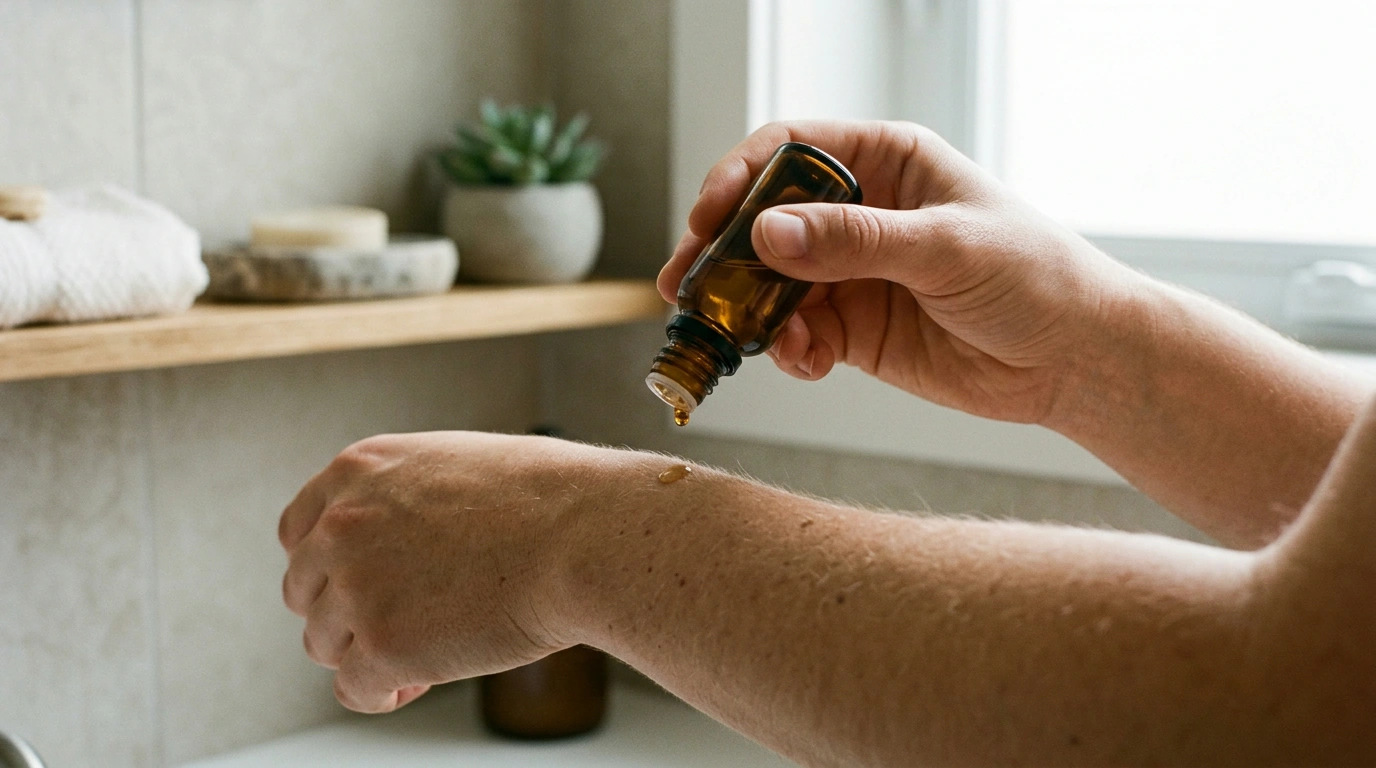
Can I put tea tree oil directly on my skin?
We don’t recommend applying undiluted tea tree essential oil directly to your skin. Even a small amount can cause stinging, dryness, redness, or an allergic reaction. Diluting it first gives you a gentler way to try it, especially if your goal is to treat a single blemish rather than a larger area.
How should you dilute tea tree oil?
For a cautious starting point, mix about one drop of tea tree oil into one teaspoon of a plain carrier oil, such as jojoba oil. Drop sizes vary, so this is an approximate dilution, not a precise measurement. Make a small, fresh batch in a clean container and apply only a little to the area you want to treat. Our team recommends avoiding added fragrance or other strong active ingredients in the same mixture; keeping it simple makes it easier to tell how your skin responds.
Before using the blend on your face, test a small amount on an area of intact skin and wait 24 hours. If you notice burning, itching, swelling, or a rash, wash it off and stop using it. You can find more step-by-step dilution and spot-treatment guidance in our tea tree oil skin safety guide.
Where should you avoid using it?
Keep tea tree oil away from your eyes, lips, nostrils, and other sensitive areas. Don’t apply it to broken or irritated skin, and don’t swallow it. If your skin is already reacting to a product, adding tea tree oil may make the irritation worse rather than help.
For a blemish, use a diluted blend sparingly as a spot treatment, not as an all-over facial oil. Start with occasional use instead of applying it several times a day. Stop if your skin feels tight, flaky, or sore. If you have eczema, very sensitive skin, or a history of reactions to essential oils, ask a dermatologist before trying it. A painful, spreading, or persistent skin problem also deserves professional advice rather than repeated spot treatment.
FAQ
Can tea tree oil cause a skin reaction even when diluted?
Yes. Dilution lowers the chance of irritation but does not rule out sensitivity or allergy. Stop using it if you develop itching, redness, swelling, or a rash.










Leave a comment