How to Make Fabric Waterproof: DWR, Wax and Seams
What is the best way to make fabric waterproof?
The best method depends on the fabric and how you plan to use it. For most washable outdoor fabrics, a durable water repellent (DWR) spray or wash-in treatment is the easiest way to improve water resistance while keeping the material flexible. For a sturdier barrier on suitable canvas, fabric wax is a useful alternative. Neither treatment automatically makes seams or closures waterproof.
We recommend starting with your goal: choose DWR when you want rain to bead up on a jacket, bag, or cushion cover; choose wax when you want a heavier, more weather-resistant finish on compatible canvas. If you need protection against prolonged rain or standing water, look for fabric with a waterproof coating or membrane and sealed seams.
How do you apply a water-repellent treatment?
Clean and dry the fabric according to its care instructions before applying a treatment. Dirt, oils, and detergent residue can interfere with coverage. Test the product on a small, inconspicuous area first to see whether it changes the color or texture.
Apply a fabric-specific DWR spray evenly in a well-ventilated area, following the product’s directions for distance, drying, and any heat activation. For a wash-in treatment, follow the specified amount and washing cycle. Once the fabric is dry, sprinkle a little water on the surface: it should bead rather than soak in immediately. Reapply when water stops beading or after the treatment wears down.
When should you use fabric wax?
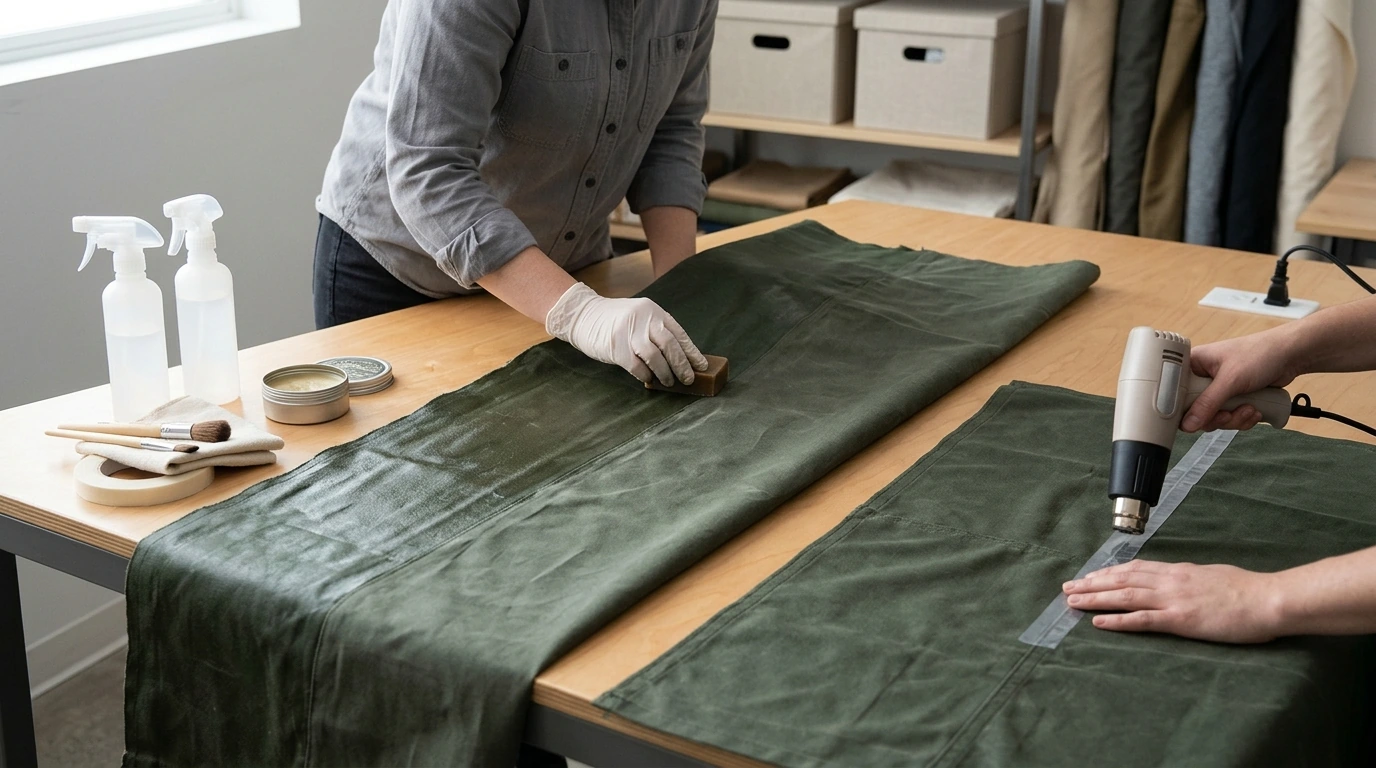
Wax works well on many cotton canvas items, including some bags and workwear. Rub it on in a thin, even layer, paying attention to high-exposure areas, then warm or finish it as directed by the wax manufacturer. A second light coat can help fill missed spots.
Wax can darken fabric and make it stiffer, so test first. Our team recommends avoiding it on delicate textiles, breathable technical membranes, and items whose care instructions prohibit waxing. Keep waxed fabric away from high heat and open flames.
What about seams?
Water can enter through needle holes even when the fabric itself repels rain. Use a seam sealer compatible with the fabric and its coating, and let it cure fully before use. For more preparation tips and a treatment checklist, see our guide to DIY fabric waterproofing.
FAQ
How long does a fabric water-repellent treatment last?
Longevity depends on the treatment, fabric, washing, and exposure to wear. Reapply when water no longer beads on the clean surface.









Leave a comment