Your Money, Your Rules: A Budget That Actually Sticks

Your Money, Your Rules: A Budget That Fits Real Life (and Still Gets Results)
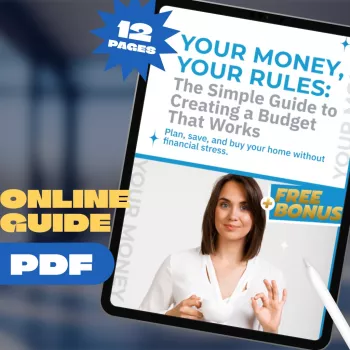
Budgets fall apart when they feel like punishment. The goal isn’t perfection—it’s clarity. “Your Money, Your Rules” is built for anyone who wants a simple, repeatable way to plan spending, cover bills, and make room for the things that matter without getting lost in complicated systems. Our digital guide + budget planner PDF helps you turn your income into a plan you can actually follow—one pay period and one decision at a time.
What “a budget that works” actually means
A budget works when it matches your real life—not an ideal week where nothing unexpected happens. Our team designed this approach around a few non-negotiables that keep your plan usable even when life gets busy.
- It matches how your income arrives (weekly, biweekly, twice-monthly, or monthly).
- It covers essentials first, then intentionally assigns the rest—no mystery money.
- It plans for irregular expenses (birthdays, car repairs, annual renewals) so they stop becoming emergencies.
- It leaves breathing room for fun spending so the plan stays sustainable.
- It’s easy enough to update in minutes—because consistency beats complexity.
Who this eBook + budget planner PDF is made for
If you’ve ever started strong and then watched your plan unravel mid-month, you’re exactly who we had in mind. This system is for momentum—not guilt.
- New budgeters who want a clear starting point and a step-by-step approach.
- Busy adults who need a fast system that doesn’t require constant tracking.
- Anyone tired of guessing where the money went by the end of the month.
- People rebuilding after a financial reset (new job, move, lifestyle change).
- Goal-setters saving for something specific—without relying on willpower alone.
Start here: the simplest way to create a budget for yourself
If you want a budget you’ll keep using, start with decisions that are easy to repeat. You can set up your first draft in one focused session and refine it each pay period.
- Pick your timeframe: monthly or per paycheck—choose what matches how you get paid.
- List guaranteed income: include what reliably hits your account; treat overtime/tips as bonus money until it arrives.
- Write down fixed bills first: rent/mortgage, insurance, minimum debt payments, phone, subscriptions you’re keeping.
- Estimate flexible essentials next: groceries, gas/transportation, utilities (use a realistic average).
- Add sinking funds: small amounts for irregular costs like car maintenance, gifts, annual fees.
- Choose a guilt-free category: a planned “yes” keeps the rest of the plan from feeling restrictive.
- Give every dollar a job: savings goals, extra debt payoff, or a buffer for surprises.
A simple budget template to copy (adjust the numbers to your life)
| Category | Examples | How to set the amount |
|---|---|---|
| Fixed bills | Rent/mortgage, phone, insurance, subscriptions | Use exact due amounts |
| Flexible essentials | Groceries, gas, utilities | Use a recent 30–90 day average |
| Sinking funds | Car repairs, medical copays, holidays, annual fees | Annual cost ÷ 12 (or by pay period) |
| Debt plan | Minimums + extra payoff goal | Minimums first, then choose an extra amount |
| Savings goals | Emergency fund, travel, big purchase | Start small and automate when possible |
| Guilt-free spending | Coffee, fun, personal treats | Set a cap that keeps the plan livable |
| Buffer | Small cushion for surprises | Even $25–$100 helps |
How the planner keeps the plan easy (instead of overwhelming)
Budgets get abandoned when they require too many daily decisions. The planner format is built so you can look at your page and quickly know what’s due, what’s flexible, and what can wait.
- A clear layout that separates bills, flexible spending, and goals.
- Space to plan goals alongside expenses so saving isn’t an afterthought.
- A structure for quick check-ins: set it up once, then maintain it with short weekly updates.
- Decision-friendly design so “Can this fit?” becomes a glance, not a stressful guess.
- Especially helpful if bills hit at different times of the month and you budget by pay period.
Common budget sticking points (and the simple fixes)
A 10-minute weekly money routine that makes budgeting stick
When to choose this guide (and what happens after checkout)
Recommended downloads from our store
- Your Money, Your Rules: The Simple Guide to Creating a Budget That Works (eBook + Budget Planner PDF)
- Unlock the Page: Your Simple Guide to Getting Motivated to Read More Books (helpful if you want a simple routine for actually finishing the guide and revisiting your plan weekly)
Helpful, authoritative resources
- Consumer Financial Protection Bureau (CFPB) – Budgeting resources
- IRS – Tax withholding estimator (useful if your paycheck changes and you budget by pay period)
FAQ
How do beginners create a budget they’ll actually follow?
Start with a pay-period or simple monthly plan, list fixed bills first, use recent averages for flexible spending, and add sinking funds plus a small buffer. Keep categories broad at first so the system feels easy enough to repeat.
What’s the difference between a budget planner and a personal finance guide?
A personal finance guide teaches the method—what to include, how to set amounts, and how to adjust when life changes. A budget planner is the tool you use to apply that method consistently with a clear layout.
Do I need to track every purchase for budgeting to work?
No—full tracking is optional. Many people do best with light tracking for the categories that tend to run high, paired with a quick weekly check-in and a clear cap for guilt-free spending.









Leave a comment