Wake-Up Checklist: Motivate Disengaged Employees Fast

The Wake-Up Checklist: a practical reset when “good enough” becomes the standard
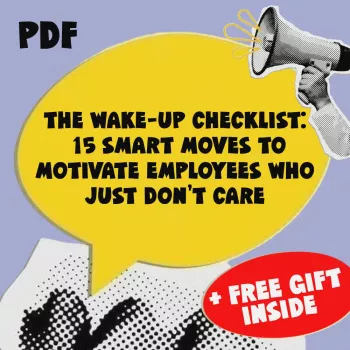
When effort drops, attitudes spread, and “good enough” quietly becomes the team standard, the fix usually isn’t louder pep talks or another generic incentive. Our team built The Wake-Up Checklist: 15 Smart Moves to Motivate Employees Who Just Don’t Care (Digital Download) as a print-and-use guide for managers who need real movement—fast. You’ll get clear signals to watch for, straightforward conversations to run, and simple changes that make work feel worth showing up for again.
Instead of guessing whether you should coach, clarify, hold the line, or offer support, you’ll have a repeatable set of steps you can apply in minutes, then track week over week.
What “they don’t care” usually means (and what it’s costing)
Apathy shows up in familiar ways: missed deadlines, minimal participation, careless errors, and “not my job” language. But the root cause is often less obvious—unclear expectations, low trust, burnout, a sense of unfairness, or feeling invisible. When the reward system feels random (great work goes unnoticed, poor work has no consequences, priorities change without explanation), motivation drops fast.
The hidden cost isn’t just one person’s output. When one person checks out, others compensate; resentment rises, collaboration fades, and you spend more time chasing basics than leading. A consistent checklist approach reduces emotion-based reactions and replaces them with repeatable steps that protect standards and morale.
Quick triage: spot the pattern before you pick the fix
| What you’re seeing | What it may signal | First move to try |
|---|---|---|
| Late work and vague updates | Unclear priorities or fear of being “wrong” | Reset the definition of done + one weekly checkpoint |
| Bare-minimum output, no initiative | Low ownership or no visible growth path | Assign a small, winnable ownership area with a clear metric |
| Cynical comments, eye-rolling, pushback | Broken trust or perceived unfairness | Hold a private reset conversation focused on specifics and impact |
| Inconsistent performance week to week | Burnout, overload, or personal stress | Rebalance workload + short-term target + support plan |
| High performer turned disengaged | Stalled development or feeling taken for granted | Add stretch work, recognition, and a timeline for growth |
How the Wake-Up Checklist works (so you can use it immediately)
This download is structured as bite-size moves you can apply in minutes, not weeks—ideal when you need traction now. It helps you separate performance issues from motivation issues so your response fits the problem: coaching, clarity, accountability, or support.
Each move is designed to be measurable. You’ll define expectations in plain language, identify the behaviors that need to change, set follow-ups that actually happen, and document outcomes so improvement is visible and easier to sustain. The tone stays practical and professional, keeping conversations firm without turning them into personal attacks.
A simple weekly rhythm that keeps momentum
You don’t need more meetings. You need a repeatable cadence that prevents drift.
| Day/Time | Manager action | What to document |
|---|---|---|
| Start of week (15 min) | Confirm top priorities and deadlines | Top 3 goals + owner + due dates |
| Midweek (10 min) | Remove blockers, check progress | Status + risks + next step |
| End of week (10 min) | Review results, recognize wins, set next target | Outcome vs goal + one improvement focus |
| As needed (5–20 min) | Reset conversation for missed standards | Specific behavior + impact + expectation + timeline |
15 smart moves that lift motivation without bribing or begging
When someone is disengaged, “more motivation” isn’t the lever—it’s better conditions for effort. The checklist focuses on motivation levers that managers can control without turning work into a negotiation.
- Rebuild clarity: tighten priorities, define what “good” looks like, and stop letting “busy” pretend to be progress.
- Create quick wins: assign achievable, high-visibility tasks that help a disengaged employee feel competent again.
- Match work to strengths (when possible): small alignment changes can restore energy and pride.
- Make recognition specific: praise the behavior and the result, not the personality, so the standard is repeatable.
- Increase ownership: give one area where the employee is clearly responsible and measured; ambiguity invites apathy.
- Reduce silent unfairness: address uneven workloads and inconsistent rules; perceived injustice kills motivation quickly.
- Set firm boundaries: kind management is not the same as low standards; accountability can be calm and consistent.
- Use short timeframes: 7–14 day targets keep focus high and prevent endless “we’ll see” cycles.
Motivation levers: pick one to start
Reset conversations that don’t backfire
Who this digital download is for (and when it helps most)
If you want deeper context on engagement and performance management, these resources are worth keeping bookmarked: Gallup on employee engagement, Harvard Business Review’s motivation topic hub, and SHRM’s managing performance toolkit.
Get the guide and put it to work this week
Product: The Wake-Up Checklist: 15 Smart Moves to Motivate Employees Who Just Don’t Care – Digital Download ($2.99)
More digital downloads you may like
- Unlock the Page: Your Simple Guide to Getting Motivated to Read More Books (Digital Download)
- Zip It Up: The Ultimate Guide to Styling Your Zip-Up Hoodie Like a Pro
- Skin Microbiome Balance: Prebiotics + Probiotics Routine
FAQ
What if an employee truly doesn’t care and refuses to improve?
The checklist helps you run a fair, documented process: clarify expectations, set a short improvement timeline, offer targeted support, and consistently enforce consequences if standards aren’t met. That protects the team while keeping your approach professional and consistent.
Can this help with remote or hybrid teams?
Yes. The weekly rhythm, written expectations, and brief check-ins translate well to remote work because they focus on outcomes, clear deadlines, and documented follow-through instead of constant monitoring.
Is this about motivating with rewards or fixing performance?
It supports both. Motivation improves when clarity, fairness, ownership, and recognition are handled well, and the same steps also strengthen accountability by making performance expectations measurable and trackable.









Leave a comment