Rebuild Your Reading Habit: A Simple 7-Day Reset
Why motivation fades (and why it’s not a character flaw)
Reading motivation tends to disappear for practical reasons, not personal ones. Motivation is an unreliable fuel source: it spikes when something feels new, then fades the moment life gets crowded. Habits, on the other hand, keep working even when you’re tired, busy, or not “in the mood.” The goal is to make your environment and routine do the heavy lifting so reading becomes the default option.
Common blockers are deceptively simple: decision fatigue (“What should I read?”), distraction loops (a quick phone check that becomes 20 minutes), perfectionism (“I should read the classics, but they feel hard”), and unrealistic time expectations (waiting for an hour that never appears). Progress usually comes from lowering the start barrier—reducing the steps between “I want to read” and “the book is open.”
Pick a reading goal that actually fits your life
Goals work best when they’re based on consistency, not volume. A small daily target that you can hit on messy days beats a big plan that only happens on perfect days. Choose one primary goal type—minutes, pages, chapters, or sessions—and then create two versions of it:
- A minimum floor: so easy you can do it even when you’re drained.
- An optional ceiling: extra time or pages for days when reading is flowing.
Finally, connect the goal to a clear reason: stress relief, learning, improving sleep, or replacing doomscrolling. Reasons create direction; the floor creates consistency.
| Goal type | Best for | Example floor | Example stretch |
|---|---|---|---|
| Minutes | Busy schedules, audiobooks + print mix | 5 minutes | 20 minutes |
| Pages | Print readers who like tangible progress | 2 pages | 15 pages |
| Chapters | Novels and narrative nonfiction | 1 short chapter | 2–3 chapters |
| Sessions | People with irregular days | 3 sessions/week | 6 sessions/week |
Make reading frictionless: set up your environment
If reading takes too many steps to start, your brain will choose the easiest alternative (usually your phone). Create a “reading landing spot” where everything you need lives: the current book, a bookmark, a pen or highlighter (optional), and a decent light. The aim is to remove micro-decisions.
Next, keep a “next book” ready. Finishing a book feels great, but it can also trigger a momentum crash if you have to hunt for your next pick. When the next book is already chosen, you can start immediately.
Finally, reduce phone pull—especially during the first 10 minutes. Move distracting apps off your home screen, turn on Focus/Do Not Disturb, or keep your phone in another room until your reading session is underway. Small behavior design changes can make a huge difference; habit research and behavior-change resources from the American Psychological Association are a helpful reference point for why environment matters.
Use tiny start rituals to trigger the habit
A start ritual is a short, repeatable sequence that tells your brain, “Now we read.” The best cue is one that already exists in your day: after coffee, after lunch, right after brushing your teeth, or right before bed.
- Make the first action effortless: open to the next page, read one paragraph, or press play on your audiobook at 1.0x.
- Add a comfort signal: a particular chair, a blanket, or tea. Keep it consistent so the feeling becomes a trigger.
If you want a deeper look at building habits through tiny actions, James Clear’s work on incremental change is a useful companion resource: Atomic Habits — Tiny Changes, Remarkable Results.
Find the right format and pace (without guilt)
Audiobooks count. They’re often the most realistic way to read during commutes, chores, workouts, or walks. Consistency matters more than format, and listening can keep the habit alive on weeks when sitting down with a print book feels like too much. For ongoing discussion of listening as part of the reading experience, browse coverage from NPR’s Books section.
If you’re rebuilding confidence, short forms are a secret weapon: novellas, essay collections, short story anthologies, or “read-in-an-hour” nonfiction. They provide frequent finish lines, which creates momentum.
Also, give yourself permission to quit books that don’t click. Finishing everything is not a requirement for being “a real reader.” The habit you’re protecting is showing up—so if a book is making that harder, swap it.
Make it satisfying: quick rewards and simple tracking
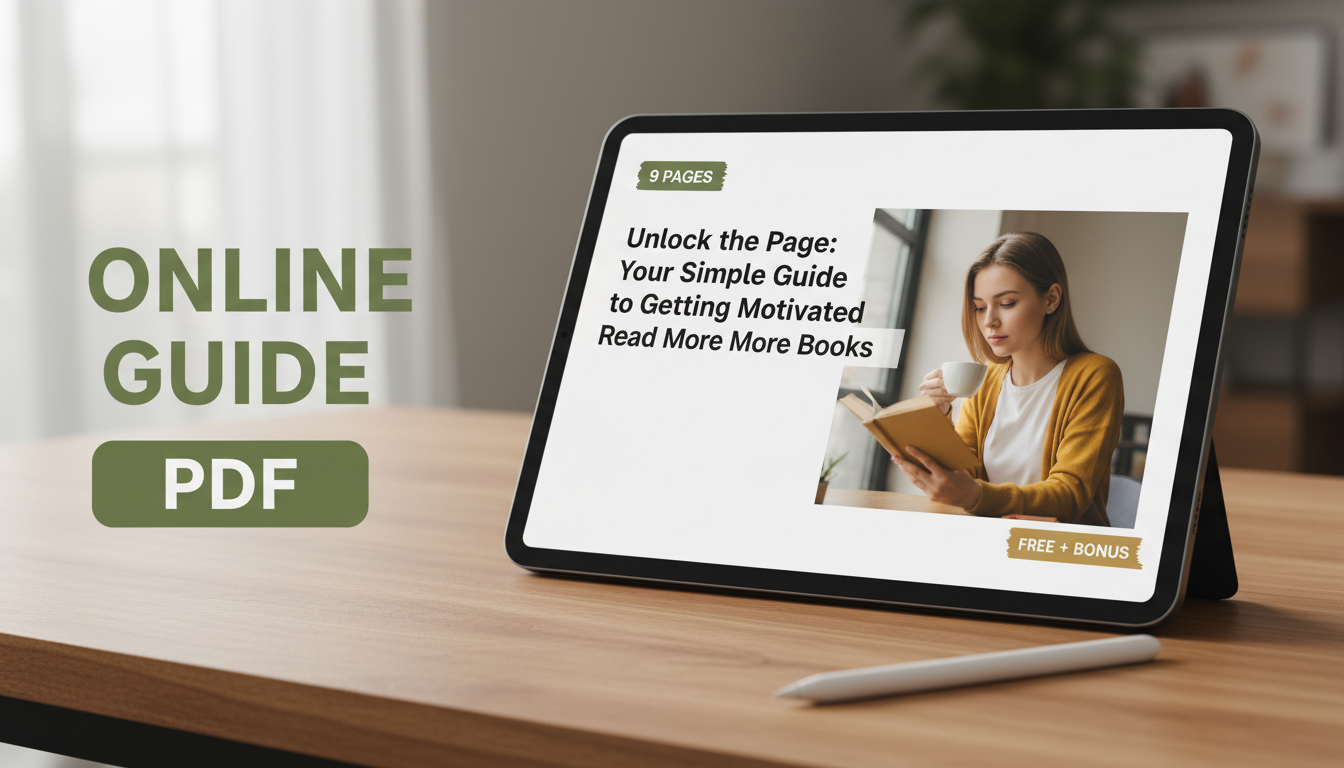
For a structured, printable-friendly system that combines goals, cues, and simple tracking prompts, see Unlock the Page: Your Simple Guide to Getting Motivated to Read More Books (Digital Download).
When motivation is low: a fallback plan that still works
A simple 7-day reset plan to restart reading
Digital reading habit guide: a structured way to stay consistent
Pairing reading with other self-care habits can also make your routine feel more anchored. If you’re building a broader “reset” season for yourself, you may also like Skin Microbiome Balance: Prebiotics + Probiotics Routine – The Ultimate Guide for Radiant, Healthy Skin as a complementary routine guide.
FAQ
How do I motivate myself to read books when I feel too busy?
Set a 5-minute floor goal, attach it to an existing routine (like coffee or bedtime), and reduce phone friction for the first 10 minutes. On packed days, use audiobooks during commutes, chores, or walks so the habit stays consistent even when sit-down time is limited.
What if I keep starting books and never finish them?
Give yourself permission to quit books that aren’t clicking and choose shorter or easier reads to rebuild momentum. Keep only 1–2 active books at a time, and consider a “last 20% sprint” where you schedule a few extra sessions to cross the finish line.
Does listening to audiobooks count as reading?
Yes—listening supports comprehension and keeps you engaged with books when print reading isn’t practical. If focus is a challenge, start at 1.0x and increase speed gradually, or pair audio with the print version for denser material.










Leave a comment