Puppy Leash Training Made Easy: A Beginner’s Guide
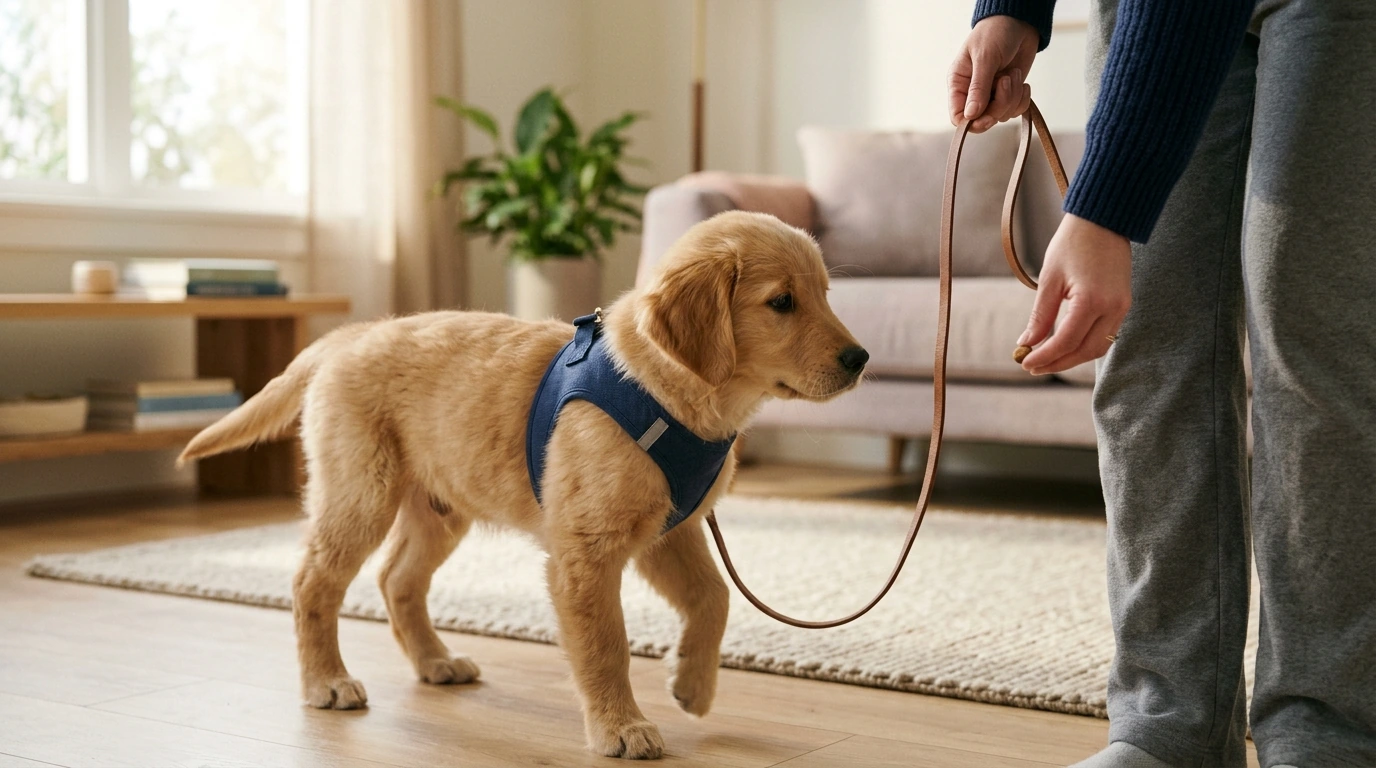
Your puppy doesn’t need to master leash walking on the first try. It’s a skill you can build together, one short, rewarding practice at a time. With comfortable equipment, a quiet starting place, and plenty of patience, you can help your puppy learn that staying near you is a good thing.
Our Leash Training Made Easy puppy training guide brings beginner-friendly methods and tips together to support your practice.
Before Your First Walk
Gather a lightweight leash, small treats, and a comfortable, properly fitted harness or collar. The equipment should stay secure without rubbing, pinching, or restricting movement. Use treats your puppy enjoys, and keep pieces small so you can reward several times during a short session.
Before putting anything on, let your puppy investigate the equipment. Reward calm interest, then introduce the harness or collar gradually. If your puppy backs away, pause and give them space rather than forcing it on. Reward calm moments while they wear it, and remove it before the experience becomes frustrating.
Start in a quiet room with enough space to take a few steps. Ask your veterinarian when and where outdoor walks are appropriate for your puppy’s vaccination status. A little indoor practice can build useful skills while you wait for the right time to venture out.
Teach Leash Walking Step by Step
Begin by rewarding your puppy for standing comfortably in their harness or collar. Once they are relaxed, clip on the leash and let them adjust to its feel while you hold it loosely. Take one step and reward them when they follow without pulling.
Repeat that small movement, then gradually add a few steps. Offer a treat near your side when your puppy stays nearby and the leash remains loose. You don’t need perfect positioning; the early goal is a relaxed puppy who is happy to move with you.
Next, practice gentle turns and brief pauses. Turn away slowly and reward your puppy for following. Pause, wait for them to notice you, and reward their attention before moving again. Keep your movements predictable and your sessions upbeat.
When indoor practice feels comfortable and your veterinarian has advised that outdoor walks are appropriate, try a quiet outdoor area. Introduce distractions gradually. If your puppy can’t settle or respond, return to a quieter place and practice an easier step.
A Simple Leash Training Progression
| Stage | Practice | Ready to progress when |
|---|---|---|
| Equipment | Reward calm moments while wearing the harness or collar | Your puppy appears comfortable |
| Indoor steps | Take a few steps and reward following | Your puppy follows with a loose leash |
| Quiet outdoor practice | Repeat the same steps with mild distractions | Your puppy can respond and take rewards |
| Everyday walks | Gradually add distance and distractions | Practice remains relaxed and manageable |
Progress won’t always be linear. A puppy who follows beautifully in the living room may need more time near an unfamiliar sound or smell. That’s a useful signal to slow down, not a reason to abandon the lesson.
What to Do When Your Puppy Pulls or Stops
If the leash tightens, stop walking and wait for slack. When your puppy returns or moves toward you, reward them and continue. This gives your puppy a chance to learn that moving together on a loose leash keeps the walk going.
If your puppy stops, check for equipment discomfort and look for signs that something nearby may be frightening. Give them space, encourage a small movement, and reward their effort. Avoid dragging them. If the setting is too busy, move back to a familiar, quieter area when you can do so without forcing them.
For persistent pulling or fear, seek help from a qualified reward-based trainer. The American Veterinary Society of Animal Behavior’s humane training resources offer guidance on reward-based approaches. You can also explore the American Kennel Club’s puppy leash-training advice for more practice ideas.
Use AI to Plan Your Practice
An AI tool can help you organize a simple session or brainstorm ways to reduce distractions. For example, you could ask:
- “Create a short, reward-based indoor leash practice plan for a beginner puppy owner.”
- “Suggest ways to make leash practice easier when my puppy is distracted outside.”
These are sample requests you can adapt to your situation. Use your judgment about what suits your puppy, and consult your veterinarian or a qualified trainer for health concerns, fear, or behavior that persists.
Keep a Helpful Guide Close at Hand
Our team offers Leash Training Made Easy for beginners who want step-by-step methods, AI ideas, and practical tips in one place. It’s listed at $11.99; visit the product page for current purchase details.
If you’d also like to make more room for reading in your routine, explore our Unlock the Page reading habit guide. For your puppy’s practice, remember that a calm moment, a single loose-leash step, or a confident turn is worth celebrating. Go at your puppy’s pace and build from there.
FAQ
How long should a puppy’s leash training sessions be?
Keep sessions short and positive, stopping while your puppy is still engaged. Gradually build practice time according to your puppy’s comfort.
What if my puppy refuses to walk on a leash?
Check the equipment’s fit and look for discomfort or fear. Try a quieter place, reward small movements, and avoid dragging your puppy.
Can AI help with puppy leash training?
AI can suggest practice ideas, but adapt them to your puppy’s needs. It should not replace professional advice about health or behavior concerns.









Leave a comment