Motivate Preschoolers to Love Learning With Simple Play
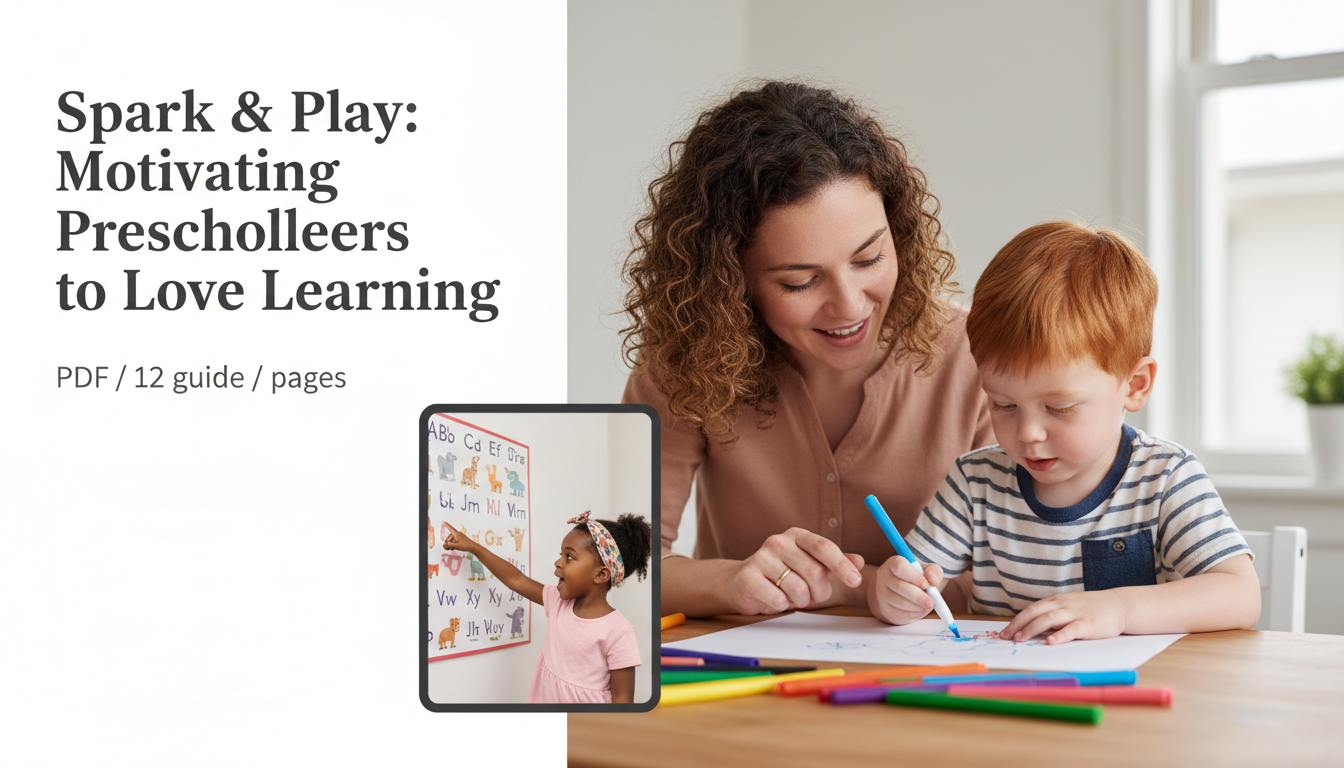
Spark & Play: Simple Ways to Motivate Preschoolers to Love Learning
Preschoolers learn best when curiosity, movement, and connection come first. Motivation at ages 3–5 rarely looks like sitting still and “doing school”—it looks like experimenting, pretending, building, and asking a hundred questions in a row. The goal isn’t to force longer lessons; it’s to make learning feel safe, playful, and doable, so kids choose to come back to it tomorrow.
Below are practical, low-pressure ways to build motivation through simple routines, meaningful choice, and encouraging feedback—without turning learning into a power struggle.
What Motivation Looks Like at Ages 3–5
Preschool motivation is often easy to miss because it doesn’t look like adult “focus.” It shows up as exploration: touching, sorting, stacking, asking “why,” and trying again with small variations. Attention usually arrives in short bursts, and learning happens in tiny loops that repeat across days.
Also, big emotions can disguise interest. A child can want to join an activity but melt down because they’re hungry, tired, overwhelmed by noise, or thrown off by a transition. Progress is uneven by design—resisting today and diving in tomorrow is normal. Most importantly, play is the main pathway for early literacy, math, language, and self-regulation skills.
Start With Connection: The Fastest Way to Unlock Participation
When connection leads, cooperation follows more easily. Try a 2-minute “join their world” ritual before you suggest any activity: sit nearby, narrate what they’re doing, and mirror their idea (even briefly). This small investment can prevent a long standoff later.
When a child resists, lead with empathy before guidance: “That feels hard,” or “You wish we could keep playing.” Then offer a choice or a short next step. Keep requests specific and brief, and pair words with a gesture or a visual cue (pointing to the bin, holding up two options, or showing a simple picture).
Transitions are a common motivation-killer, so make them predictable: a quick countdown, a clean-up song, or “two more turns” can reduce surprise. And when you praise, spotlight effort and strategy—“You tried two ways” or “You kept going”—instead of labeling ability.
These relationship-based “serve and return” moments are a powerful learning engine in early childhood; Harvard’s Center on the Developing Child explains the concept and why it matters for growth and confidence: Serve and Return.
Design a Playful Learning Environment That Pulls Them In
Motivation rises when the environment says, “Come try this,” instead of “Work time.” Rotate a few materials weekly rather than leaving everything out; novelty can boost engagement without buying anything new. Keep open-ended items within reach: blocks, paper, crayons, play dough, stickers, and sorting cups.
One of the simplest tricks is an “invitation to play”: set out a tray with 3–5 items that suggest an activity with no instructions. For example, a few toy animals + a blue scarf + small cups quietly invites sorting, storytelling, and counting. Reduce friction by prepping supplies (pre-sharpen pencils, cap glue sticks, keep sets in clear bins) so momentum isn’t lost to “I can’t open this.”
Have calm-down tools nearby to prevent derailment: a stuffed animal, a small fidget, or a couple of picture books. When kids can regulate, they can rejoin learning faster.
For more on developmentally appropriate expectations—what’s realistic for preschool attention and behavior—NAEYC’s guidance is a helpful reference: Developmentally Appropriate Practice.
Motivation Tools That Work (Without Bribes)
Daily Micro-Routines That Build a Love of Learning
If you want age-aligned pointers for routines, behavior, and encouragement, the CDC’s preschool parenting tips are a solid companion resource: CDC: Positive Parenting Tips (Preschoolers 3–5 years).
Quick Activity Menu: Match the Activity to the Mood
| Activity | What it practices | How to keep it motivating |
|---|---|---|
| Sticker patterns | Patterns, fine-motor control | Let the child choose the theme; stop after one successful row |
| Story retell with toys | Language, sequencing | Use favorite characters; accept silly versions |
| Sorting treasure hunt | Early math, categorizing | Hide 10 items; celebrate finding strategies |
| Letter/number hop | Letter/number recognition, gross motor | Use big cards on the floor; keep rounds short |
| Build and measure | Spatial skills, measurement words | Compare “taller/shorter”; take photos of creations |
Handling Resistance and Tantrums Around Learning Moments
Using the Spark & Play Digital Guide
If you want ready-to-use ideas and simple scripts for common moments, Spark & Play: Motivating Preschoolers to Love Learning (Digital Guide) is designed as a pick-and-go toolkit for parents and educators. Choose one focus each week—attention, transitions, curiosity, or independence—and repeat small wins until they feel natural. Many families print a few pages for quick access or keep it open on a tablet during routines, then jot notes on what worked to build a personalized plan.
For adults who also want a gentle nudge to strengthen their own reading rhythm (which often supports family reading routines), Unlock the Page: Your Simple Guide to Getting Motivated to Read More Books can help make “book time” easier to sustain.
What to Look for in a Preschool Motivation Guide
FAQ
How can a preschooler be motivated to learn without rewards?
Use meaningful choices, playful challenges, and short goals that end on success. Praise effort and strategies, and connect activities to the child’s interests so learning feels personal and fun.
What if my child refuses learning activities every time?
Reduce demands, check timing and basic needs, and use first/then language with two clear options. Shift to cooperative or pretend-play formats and rely on consistent micro-routines instead of long sessions.
How long should a preschool learning activity last?
Often 3–10 minutes is plenty. Stop while it’s going well, repeat later, and gradually extend only when the child is genuinely engaged.









Leave a comment