Minimalist Open Shelf Styling: Organize Without Clutter
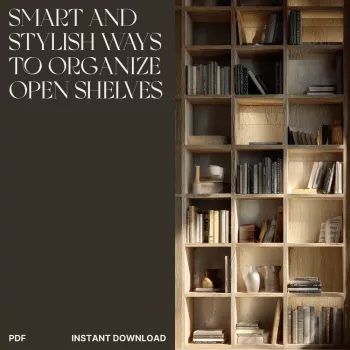
Smart & Stylish Ways to Organize Open Shelves (Without Losing the Minimalist Look)
Open shelves can feel effortlessly modern—or instantly cluttered. The difference usually isn’t “more décor,” it’s a simple system: edit with intention, group with purpose, and style with a few repeatable rules. Our team put this plan together so your everyday items stay easy to reach while the overall look stays calm, balanced, and minimalist. For more guidance, see Smart Home Product Layout Design Method Based on Real ….
Start with a purpose for each shelf (so “decor” doesn’t turn into storage)
Minimal shelves start with a decision: what is each shelf for? When one surface tries to hold dishes, mail, candles, and spare batteries, it will always read as clutter—even if the items are “pretty.” For further reading, see Downsizing Your Home With Style.
- Assign one clear job per shelf zone: display, daily-use, backup storage, or seasonal rotation.
- Decide what should be visible vs. contained: anything with visual “noise” (labels, bright packaging, mixed materials) belongs in a basket, box, or bin.
- Use a simple visibility rule: most-used items live between shoulder and waist height; less-used items go higher or lower.
- Create a consistent look: choose a primary palette (2–3 neutrals + 1 accent) and repeat it across shelves.
| Shelf type | Best for | What to hide | Simple styling move |
|---|---|---|---|
| Kitchen open shelving | Everyday dishes, glassware, pantry staples in jars | Packaging, small tools, mismatched extras | Repeat one material (all clear jars or all ceramic canisters) |
| Living room shelves | Books, framed prints, a few sculptural objects | Cables, remotes, loose paperwork | Build 2–3 “clusters” and leave one open breathing space |
| Bathroom shelves | Rolled towels, daily skincare, refill bottles | Backups, travel items, bright labels | Decant into matching bottles; corral small items on one tray |
| Home office shelves | Reference books, binders, décor that motivates | Receipts, chargers, supplies overflow | Use one lidded box per category and keep spines aligned |
Edit first: the minimalist filter that makes open shelves look intentional
If your shelves feel chaotic, don’t style around it—edit first. A clean-lined look comes from fewer, better-chosen items, not from perfect arranging.
- Pull everything off and sort into four piles: keep, relocate, donate, and “decide later.”
- Keep only what supports the shelf’s purpose: avoid letting one shelf serve five unrelated categories.
- Limit duplicates: choose a “working set” (what actually gets used) and store backups out of sight.
- Choose one statement piece per shelf run: a single standout vase, art print, or sculptural object keeps the look clean.
If you want a clear path from messy to minimal without guessing, our team built a step-by-step plan you can follow: Smart & Stylish Ways to Organize Open Shelves (digital download).
Group like items into clean categories (then give each category a home)
Minimalism isn’t about owning nothing—it’s about making what you own easy to understand at a glance. The fastest way to get there is grouping.
- Think in categories, not individual objects: mugs, bowls, cookbooks, vases, candles, office supplies, skincare, and so on.
- Use containment to reduce visual clutter: baskets for soft goods, boxes for small items, trays for daily-use “drop zones.”
- Anchor categories with consistent shapes: matching jars, identical bins, or a repeated basket style creates instant order.
- Label discreetly when needed: inside a bin lid, on the back, or with a minimal tag to keep the look streamlined.
For professional organizing principles and category-based systems, you can also reference the National Association of Productivity & Organizing Professionals (NAPO).
Style with structure: a repeatable formula for modern shelf styling
Once the shelf is edited and categorized, styling becomes simple—and repeatable. Instead of moving objects around forever, use structure.
If you like collecting ideas for simple styling moves that still feel livable, Apartment Therapy and The Spruce are solid sources for room-by-room inspiration.
Containment that still looks minimal: baskets, bins, and bookends that disappear
If your shelves include books and you want them to feel more intentional (not like overflow), our team also offers Unlock the Page: Your Simple Guide to Getting Motivated to Read More Books (digital download)—a helpful companion for building a steady reading rhythm so your “keep” pile stays meaningful.
Keep it looking “finished”: a 5-minute shelf reset routine
Put it all together with the digital guide (a step-by-step shelf styling plan)
You can use it room-by-room—kitchens, living rooms, bathrooms, and offices—without reinventing the wheel each time. Get the full plan here: Smart & Stylish Ways to Organize Open Shelves | Minimalist Home Decor Guide (Digital Download).
If you’re refreshing other parts of your routine at the same time, our team also offers Skin Microbiome Balance: Prebiotics + Probiotics Routine (digital guide)—a simple framework for keeping daily essentials streamlined, which pairs nicely with a calmer bathroom shelf setup.
FAQ
How do open shelves look minimalist without feeling empty?
Use intentional negative space plus a few structured clusters. Aim for 2–3 grouped moments per shelf run, repeat a limited palette, and leave one clear zone per shelf so the styling looks purposeful, not sparse.
What should be stored in baskets or bins on open shelves?
Hide items with lots of visual noise: bright packaging, small loose accessories, cords, backups, and mixed tiny tools. Keep calm, repeatable shapes visible, like jars, matching bottles, neutral books, and a few sculptural accents.
How often should open shelves be reorganized?
A quick weekly straighten keeps shelves from drifting into clutter. Do a deeper seasonal reset to rotate items, reduce duplicates, and make sure the shelf’s purpose still matches how the space is used.



Leave a comment