Make Any Room Brighter: Quick Fixes & Lighting Layers
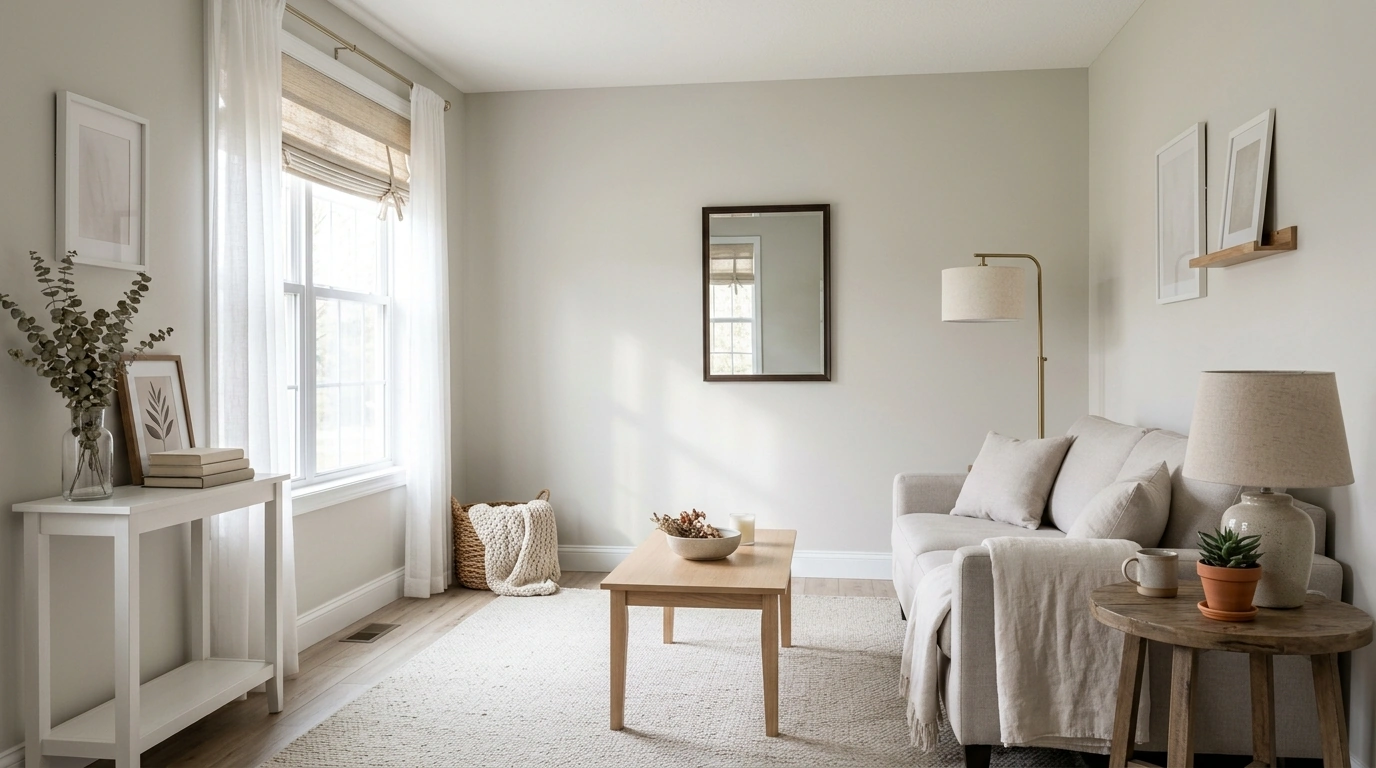
Simple Ways to Make Any Room Brighter (Without Renovating Your Life)
A brighter room feels lighter, calmer, and more “put together” even when nothing else changes. The best part: most of the biggest brightness wins come from small, low-stress tweaks—where light lands, what it bounces off, and how the space is edited. Our team uses a simple order of operations: fix what’s blocking light first, then layer lighting, then make a few design choices that keep brightness “circulating” all day. For more guidance, see Fastest Way to Learn Interior Design Online.
Start with the fastest wins (15 minutes or less)
- Clean the light sources: Wipe bulbs, shades, and glass covers. A thin film of dust quietly steals output and makes light look dull.
- Open up the window zone: Pull furniture a few inches away from the window so daylight can spread instead of getting trapped behind a sofa arm or headboard.
- Trim visual clutter near light: Clear window sills and the tops of consoles/dressers—light reads brighter when it doesn’t hit a pile of “stopping points.”
- Swap one dark, heavy textile: Trade a deep-toned throw, dark pillow covers, or a heavy runner for a lighter version. One change can lift the whole room’s mood.
- Turn mirrors toward light: Angle a mirror so it reflects a window or lamp glow (not a blank wall). You’re essentially redirecting existing light, not adding more stuff.
Use light like a layering system (ambient + task + accent)
If your room relies on one overhead fixture, the corners will almost always feel dim. We aim for three light points so light arrives from different heights and directions. For further reading, see 1000 Interior Details For The Home And Where To Find Them.
- Aim for three light points, not one ceiling fixture: Overhead-only lighting flattens the room and leaves “dead zones.”
- Place a lamp where the room “dies”: Start with the darkest corner; when that lifts, the whole room reads brighter instantly.
- Choose warmer vs. cooler with intention: Cooler bulbs can look brighter, but warm light often looks better in living spaces. Balance comfort with brightness.
- Add a plug-in dimmer or smart bulb: Control is brightness. You can push light higher in late afternoon and soften it at night without changing fixtures.
- Use bounce lighting: Point a floor lamp toward the ceiling or a wall to spread light softly across the room.
| Layer | Best for | Easy add-ons | Placement tip |
|---|---|---|---|
| Ambient | Overall brightness | Ceiling light + uplight floor lamp | Push light outward to corners |
| Task | Reading, work, makeup | Table lamp, adjustable desk lamp | Keep light at shoulder height or slightly above |
| Accent | Depth and sparkle | Picture light, LED strip, small lamp | Highlight one wall, shelf, or plant |
For practical bulb guidance (brightness, efficiency, and what to buy), we like the straight-to-the-point recommendations from ENERGY STAR and the U.S. Department of Energy.
Make daylight travel farther
- Go sheer where privacy allows: Light-filtering panels keep the room bright while still softening glare.
- Hang curtains higher and wider: Mount closer to the ceiling and extend past the window frame so the window feels larger (and the room feels taller).
- Lighten the window-adjacent wall: Even a small move toward a lighter paint tone near the window increases bounce.
- Keep the “daylight path” clear: Avoid tall, bulky pieces directly beside windows when possible so daylight can fan out.
- Use reflective accents sparingly: A glass vase, glossy tray, or metallic frame near the window adds lift without making the room feel shiny everywhere.
Choose colors and finishes that lift the room (without going all-white)
Edit the layout so the space feels lighter
Small decor shifts that brighten instantly
A simple plan for hard rooms (north-facing, small windows, dark walls)
Make it easy: our step-by-step Brighter Room eBook
If you want a clear order of operations (so you don’t waste money on random decor), our team put the full system into a practical digital guide: Simple Ways to Make Any Room Brighter | Home Decor eBook. It’s designed for real homes—rentals, small spaces, and lived-in rooms—so you can move from quick fixes to deeper upgrades without the overwhelm.
And if your biggest challenge is sticking with any home refresh project long enough to finish it, you may also like Unlock the Page: Your Simple Guide to Getting Motivated to Read More Books—a simple structure for building a routine when decision fatigue is real.
FAQ
What’s the easiest way to make a room feel brighter without repainting?
Layer your lighting by adding a lamp to the darkest corner, swap one heavy/dark textile for a lighter one, and angle a mirror toward your main light source so you’re multiplying the light you already have.
Do cooler bulbs always make a room brighter?
Cooler color temperature can look brighter, but it can also feel stark in living spaces. A better approach is to balance Kelvin with enough lumens and use layered lighting so the room stays both bright and comfortable.
How many lamps should a living room have to feel bright?
A practical target is three light points (ambient + task + accent). Start with one lamp in the darkest corner, then add task lighting near seating where you actually read or relax.






Leave a comment