New Creator Style Guide: Fix Rookie Content Mistakes
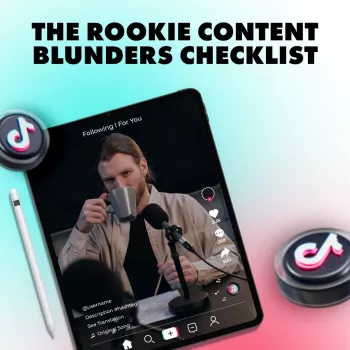
The Rookie Content Blunders Checklist: A Simple Style Guide for New Creators
New creators lose a surprising amount of time fixing avoidable issues: unclear messaging, inconsistent tone, weak structure, and posts that don’t guide the audience to a next step. A checklist-style approach makes it easier to spot the common problems early, tighten drafts faster, and publish with more consistency—whether you’re writing captions, posts, emails, landing pages, or short scripts.
If you want a ready-to-use reference you can keep open while you write, The Rookie Content Blunders Checklist (digital download) is designed for quick scans before you hit publish.
What “rookie blunders” look like in real content
- Publishing without a clear point: the audience can’t tell what to do, feel, or remember.
- Chasing trends without alignment: content borrows a format but doesn’t connect to your niche, offer, or audience need.
- Sounding different on every platform: tone, formatting, and message shift post-to-post, so trust builds slower.
- Over-explaining: long intros, buried takeaways, and no scannable structure.
- No action path: helpful content that never invites the next step (save, reply, click, download, buy).
These aren’t “talent” problems. They’re systems problems—fixed with a repeatable pre-draft check, a cleaner structure, and a few style rules that stay consistent.
Before drafting: the 5-minute clarity check
Before you write a single paragraph, lock the basics. This prevents the “kitchen sink” draft—where everything is included and nothing lands.
- Define one audience segment for the piece (beginner, busy buyer, skeptical researcher, repeat customer).
- Choose one outcome: educate, reassure, compare, inspire, or convert—avoid mixing all at once.
- Write a one-sentence takeaway that can become your headline or hook.
- Decide one primary CTA and one optional secondary CTA.
- Collect only 2–4 supporting points or examples to keep the draft tight.
If you want a second digital resource that supports consistency in your reading-and-learning routine (which directly impacts your writing output), Unlock the Page: Your Simple Guide to Getting Motivated to Read More Books can help you build steadier input—without relying on motivation spikes.
Drafting mistakes that weaken trust (and how to fix them)
1) Vague claims
Words like “game-changing” and “must-have” read like marketing filler unless you attach specifics. Swap hype for concrete outcomes: time saved, steps reduced, mistakes avoided, or what changes after the tip is applied.
2) Jargon overload
If you use insider terms, define them in five words or less—or replace them with plain-language equivalents. Readers shouldn’t need your background knowledge to understand the point.
3) Missing context
Add one credibility line: “When this works / when it doesn’t.” That small boundary makes your advice feel more real and less like a blanket claim. Helpful-content guidance from Google Search Central also emphasizes clarity and reliability—both improve when you include limits and context.
4) Unbalanced tone
Confident writing is good. Absolute writing (“always,” “never,” “this works for everyone”) is fragile. Use examples and conditions so your tone stays strong without sounding unrealistic.
5) Wall-of-text formatting
Many readers skim before they commit. Use short paragraphs, bullets, and bold-friendly phrasing so the key ideas survive a fast scroll. For a deeper look at why this matters, Nielsen Norman Group’s research on how users read on the web is a solid reference.
Structure blunders: the easiest wins for better flow
- Weak opening: lead with a problem, surprising truth, or outcome—then deliver the promise quickly.
- No signposting: add clear subheads, numbering, or “Step 1 / Step 2” so readers don’t get lost.
- Idea stacking: one paragraph should do one job (explain, prove, instruct, or transition).
- No examples: include one mini example, template line, or “good vs. better” rewrite.
- Endings that fade out: close with a summary line plus the next action to take.
Simple “Fix-It” rewrites for common rookie lines
| Rookie version | Stronger version |
|---|---|
| “This will change everything.” | “Use this checklist before publishing to catch clarity, structure, and CTA issues in under 10 minutes.” |
| “Here are some tips.” | “Start with these 3 fixes to make your next post clearer and easier to skim.” |
| “Don’t forget to engage!” | “Ask one specific question and invite a one-word reply to lower friction.” |
| “My content isn’t working.” | “Pick one goal for the post (educate or convert) and remove anything that doesn’t support it.” |
Consistency blunders: building a simple style guide
Editing and publishing checklist: a fast final pass
When time is tight, the goal is a repeatable review that catches the highest-impact issues first. A strong editing habit often comes down to conciseness—Purdue OWL’s guidance on clarity and concision is a helpful baseline for trimming without losing meaning.
Digital download: The Rookie Content Blunders Checklist
If you want a quick-reference tool you can use while drafting or editing, The Rookie Content Blunders Checklist | Digital Download is built for beginners who want cleaner drafts with fewer rewrites.
FAQ
Is this checklist only for bloggers, or can it work for social posts and emails too?
It works across formats because it focuses on clarity, structure, tone, and the call to action. The layout may change between a caption and a newsletter, but the same checks help both read cleaner and convert better.
How long should a final review take using the checklist?
Most final passes take about 5–15 minutes, depending on length and how clean the draft is. A fast order that stays consistent is: clarity, structure, proof, CTA, then accessibility.
What if the content is helpful but still doesn’t get engagement?
Engagement can lag for reasons beyond writing quality: distribution, audience fit, timing, an unclear promise, or a weak CTA. Test one variable at a time—often the quickest win is strengthening the hook and making the next step more specific and easier to do.










Leave a comment