Daily Walk Routine for Dogs & Indoor Cats (7-Day Plan)
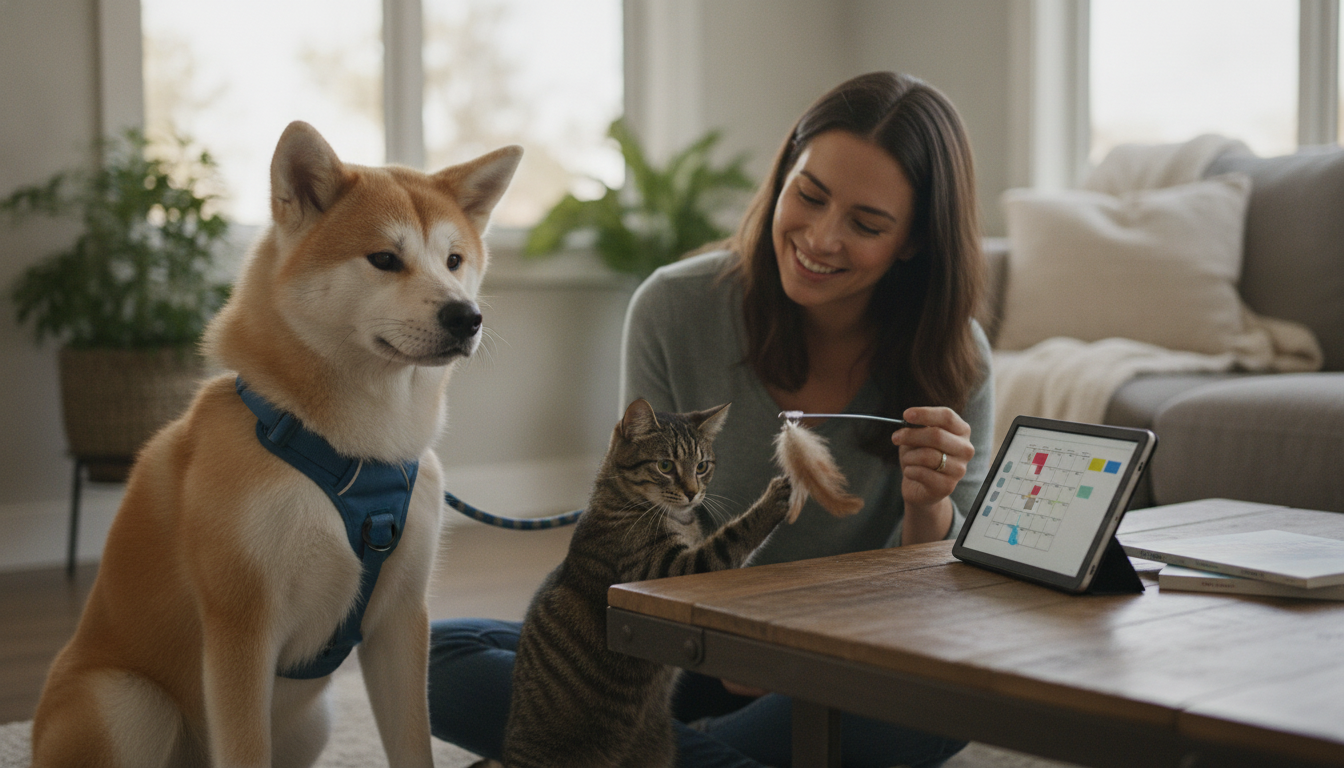
Daily walks and structured movement help many pets burn energy, practice calm behaviors, and add predictable enrichment to the day. A simple routine—built around timing, safety, and small habit cues—makes it easier to stay consistent whether walking a dog outdoors or adding leash, stroller, or harness time for a cat. This guide breaks the routine into clear steps, realistic schedules, and quick adjustments for weather, age, and temperament.
What “Daily Walks” Can Look Like for Dogs and Cats
“Daily walks” doesn’t have to mean a single long loop around the neighborhood. The best routine is the one your pet can repeat calmly, most days of the week, without leaving them overstimulated or sore.
- Dogs: neighborhood walks, sniff-focused strolls, short bursts of structured heel practice, and decompression walks in quieter areas.
- Cats: harness training indoors first, short outdoor “patio walks,” stroller walks, or indoor walking circuits paired with treat scattering.
- Goals vary: age, breed, health, and personality matter—duration often matters less than consistency and calm engagement.
- Best routines blend: physical activity plus mental enrichment (sniffing, exploring, simple cues).
Common daily-walk formats by pet type
| Format | Best for | Typical duration | Notes |
|---|---|---|---|
| Sniffari walk (loose-leash, exploration) | Most dogs, anxious or overexcited dogs | 15–45 min | Prioritize sniffing and decompression over distance |
| Structured walk (short training intervals) | Dogs learning leash manners | 10–30 min | Mix 1–3 minute “focus” moments with relaxed walking |
| Harness practice indoors | Cats new to gear; shy cats | 3–10 min | Pair harness with treats and play; end before frustration |
| Stroller/patio time | Cats or small dogs; seniors; rehab | 10–30 min | Lower impact; still provides novelty and scent exposure |
| Indoor walking circuit + enrichment | Bad-weather days; reactive pets | 10–20 min | Add treat trails, “find it,” or simple cues to increase mental load |
The Habit Loop: Cues That Make the Routine Automatic
Consistency gets easier when the routine is triggered by simple, repeatable cues—so you’re not negotiating motivation every day.
- Pick a consistent cue: the same time window, a pre-walk phrase (“Shoes on—let’s go”), or a visible “walk station” with leash, harness, waste bags, and treats.
- Use a 2-minute starter rule: gear on and step outside (or start an indoor circuit) even on low-energy days; extend only if your pet is comfortable.
- Keep the sequence predictable: potty break → calm walking → sniff time → short training → cool-down → water and rest.
- Track consistency, not perfection: aim for a weekly baseline and plan “light days” for busy schedules.
Choosing the Right Time and Frequency
Timing changes the whole feel of a walk. A calmer environment often beats a longer route in a busy one.
- Morning: helps many pets settle, reduces restlessness, and can support daytime calmness.
- Midday mini-walk: a short reset for high-energy dogs and indoor cats who enjoy harness time.
- Evening: helpful for decompression after a stimulating day; keep intensity moderate before bedtime.
- Frequency options: one longer walk + one short sniff break, or three shorter outings for puppies, seniors, and small dogs.
- For cats: start with micro-sessions (2–5 minutes) and add time gradually as confidence grows.
If you’re unsure what’s appropriate, start smaller than you think, then increase based on recovery and body language. For general pet care guidance, the American Veterinary Medical Association (AVMA) and the American Kennel Club (AKC) offer helpful owner resources.
Safety and Comfort Checklist (Weather, Gear, and Body Language)
A good routine is safe enough to repeat. Before you walk, do a quick scan of the environment and your pet’s signals.
- Check conditions: temperature, pavement heat, ice, road salt, and crowded areas that may overwhelm your pet.
- Gear basics: properly fitted harness or collar for dogs; secure harness (often with a backup connection) for cats; reflective elements for low light.
- Carry essentials: water on longer walks, waste bags, high-value treats, and updated ID/microchip info.
- Watch body language: lagging behind, tucked tail, frequent stopping, lip licking, crouching (cats), or frantic scanning can signal stress.
- End on a calm note: shorten the route and return before your pet becomes overstimulated or exhausted.
A Simple 7-Day Starter Plan
Solving Common Routine Roadblocks
Pulling on leash
Reactivity (dogs)
Cat refuses the harness
Busy schedules and “missed” days
Bad weather
A Guided Routine You Can Follow Day by Day
A structured plan reduces guesswork by giving you a repeatable sequence, pacing suggestions, and quick modifications for different pets. If you want a ready-to-use routine with checklists you can pull up on your phone, the Happy Paws Daily Walks digital guide is designed for dog owners and indoor cat households alike.
If building habits is the hardest part, pairing your pet routine with a simple personal routine can help you stay consistent—like Unlock the Page: Your Simple Guide to Getting Motivated to Read More Books for daily momentum. And for anyone who likes structured self-care alongside pet care, Skin Microbiome Balance: Prebiotics + Probiotics Routine adds an easy routine framework you can stack with morning or evening walks.
FAQ
How long should a daily walk be for a dog?
Many dogs do well with about 15–60 minutes a day total, but the right amount depends on age, breed, health, and temperament. Start with short, consistent walks and adjust based on recovery, stress signals, and your veterinarian’s guidance for any medical conditions.
Can indoor cats benefit from a walking routine?
Yes—many indoor cats enjoy gradual harness training, short safe outings, stroller/patio time, or indoor walking circuits with treats. Focus on security (a well-fitted harness) and let the cat set the pace so confidence builds without pressure.
What if a pet skips a day—does the routine fail?
No—consistency works best as a weekly baseline, not a perfect streak. Use a “2-minute starter” or a minimum viable walk on busy days, then return to your usual cue and sequence the next day.










Leave a comment