A Calm Homework Routine: Toolkit to Build Independence

Homework Help Made Easy: Turn the Daily Push into a Repeatable Plan
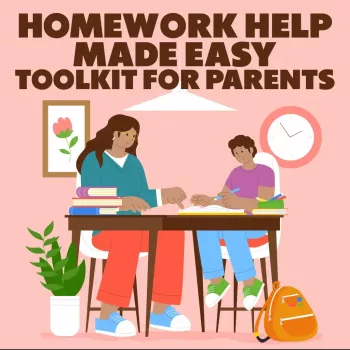
Homework time can become the daily stress point in an otherwise good routine—especially when kids are tired, you’re juggling dinner or emails, and everyone wants it done fast. Our Homework Help Made Easy Toolkit for Parents is built to change the dynamic: homework becomes a system with clear expectations, simple routines, and step-by-step support that helps your child practice independence while you stay consistent (without hovering).
When you have a plan you can repeat, you spend less energy negotiating and more energy teaching the skills that actually carry over: starting, sticking with it, checking work, and finishing strong.
What “Help” Looks Like When It Actually Builds Independence
Real homework help isn’t doing more—it’s doing less over time, on purpose. The goal shifts from “finish the worksheet” to “learn how to start, stick with it, and wrap up.”
- Use support that fades: begin with structure and prompts, then step back as your child’s routine becomes automatic.
- Separate roles clearly: you set the environment and expectations; your child does the thinking and the work.
- Build repeatable habits: a start time window, setup routine, break plan, and end check beat one-off fixes every day.
When your child knows you’ll help them get started and get organized—but not “rescue” the work—they learn to tolerate challenge and keep going.
Set Up a Homework Routine That Doesn’t Rely on Motivation
Motivation comes and goes. Systems stay. A routine works best when it’s predictable but flexible enough for real life.
- Pick a consistent start window (not an exact minute) and a consistent finish cue (snack, play, dinner, screen time).
- Create a quick “launch sequence”: backpack drop, short reset, gather materials, choose the first task, set a timer.
- Decide your break plan before starting: short, predictable, and not renegotiated mid-task.
- Make the workspace boring-on-purpose: tools in reach, distractions out of sight, and device rules clear.
Simple Weekly Homework Routine (fill in and post near the workspace)
| Day | Start Window | First Task (Quick Win) | Focus Timer | Break Plan | Finish Check |
|---|---|---|---|---|---|
| Mon | ____ to ____ | ________________ | 10/15/20 min | 2–5 min | Pack + initial planner |
| Tue | ____ to ____ | ________________ | 10/15/20 min | 2–5 min | Check completed items |
| Wed | ____ to ____ | ________________ | 10/15/20 min | 2–5 min | Tidy workspace |
| Thu | ____ to ____ | ________________ | 10/15/20 min | 2–5 min | Backpack reset |
| Fri | ____ to ____ | ________________ | 10/15/20 min | 2–5 min | Weekend preview |
Use Homework Strategies That Reduce Battles (and Increase Follow-Through)
A few small strategy swaps can prevent the most common arguments: starting, staying focused, and “I’m done” (when they aren’t).
- Start with a quick win: choose the shortest or easiest task first to build momentum.
- Make big assignments visible: plan → draft → revise → final, with mini-deadlines your child can check off.
- Let the timer be the “bad guy”: work until it rings, then take the planned break (not a break requested in frustration).
- Add a 2-minute end routine: reread directions, scan for missed questions, confirm it’s ready to submit.
- Offer simple choices: “math first or reading first?” instead of “do you want to do homework?”
For evidence-informed guidance on homework and kids, you can also reference the American Psychological Association (APA) overview on homework, practical classroom-tested ideas at Edutopia, and homework support strategies at Understood.
A Parent’s Script: Prompts That Coach Without Doing the Work
When your child asks for help, prompts keep the thinking on their side of the table. Our team recommends choosing one prompt and sticking with it long enough for your child to internalize the routine.
- Start-up prompt: “Show the directions and tell what the first step is.”
- Stuck prompt: “Read the question out loud and underline what it’s asking.”
- Organization prompt: “What materials do you need before you begin?”
- Persistence prompt: “Try two more minutes, then we’ll decide the next move.”
- Accountability prompt: “What will you check before you say it’s finished?”
When Homework Melts Down: A Calm Reset Plan
Meltdowns usually follow patterns. When you treat a blow-up like information—not a personal failure—you can reset faster and keep the plan intact.
How Our Printable Toolkit Fits Into a Busy Week
Recommended Tools from Our Store (Optional, But Helpful)
- Homework Help Made Easy Toolkit for Parents – Printable Guide for Creating Study Habits, Homework Strategies & Independent Learning (USD 7.99)
- Unlock the Page: Your Simple Guide to Getting Motivated to Read More Books (USD 9.99)
What It’s Included For (and Who It Helps Most)
FAQ
How do parents help with homework without doing it for them?
You help by owning the structure: set the routine, reduce distractions, and use prompts that guide your child to find the next step. Ask questions (“What’s the first direction?”) instead of giving answers, and use timers and checklists so your child does the thinking and the work.
What if homework takes too long every night?
Use focus blocks with a timer, planned breaks, and a “quick win” first task to improve efficiency and reduce stalling. If the same subject consistently runs long, track the pattern for a week and share it with the teacher so you can problem-solve expectations and workload.
What age is this homework toolkit best for?
It’s flexible for elementary through middle school: you provide more hands-on structure at first, then fade support as your child builds routines. Older students can use the same framework as a self-management system for planning, focus blocks, and end-of-session checks.









Leave a comment