Easy Brain Games for Dogs & Cats: Puzzles and Scent
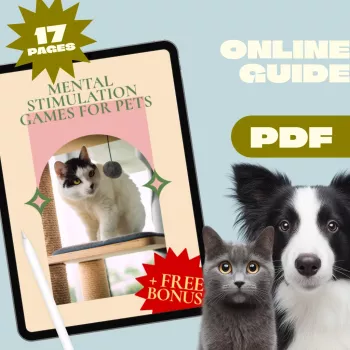
Mental Stimulation Games for Dogs and Cats: Brain Training, Puzzle Feeding, and Scent Work You Can Do at Home
Mental enrichment helps pets feel calmer, more confident, and less likely to channel boredom into nuisance behaviors. A simple routine of short, fun “brain workouts” can make a noticeable difference for both dogs and cats—especially when games are rotated and tailored to energy level, age, and food motivation.
Why mental enrichment matters for everyday behavior
Dogs and cats are built to work for information: what’s safe, what’s interesting, what’s edible, and what’s worth chasing. When that need goes unmet, many pets create their own “jobs,” which often look like excessive barking, chewing, counter surfing, or midnight zoomies.
- Reduces boredom-driven behaviors by giving your pet an appropriate outlet.
- Builds confidence through predictable, solvable challenges and frequent small wins.
- Supports calmer downtime by meeting natural needs: hunting, sniffing, problem-solving, foraging.
- Strengthens the human–pet bond through cooperative games and clear communication.
- Complements physical exercise on low-energy days, bad-weather days, or recovery periods.
For deeper behavior and enrichment context, helpful starting points include the American Veterinary Society of Animal Behavior (AVSAB) resources and the ASPCA DIY enrichment ideas.
Pick the right type of game for the pet in front of you
The “best” game is the one your pet can solve without melting down. Match the activity to motivation (food, toys, interaction), then adjust difficulty by changing distance, hiding complexity, and the number of steps required to succeed.
- Food-foraging games for meal-motivated pets who enjoy searching.
- Scent-based games for dogs who love sniffing and tracking; for cats, use “find the treat” or “find the toy” variations.
- Shaping and trick games for pets who like interaction and can focus with short sessions.
- “Choice and control” games for anxious or easily frustrated pets—keep difficulty low and predictable.
- Adjust difficulty by changing distance, hiding complexity, container type, and the number of steps to succeed.
Quick game matcher: goal → best starter options
| Goal | Good for | Starter games | Increase difficulty by |
|---|---|---|---|
| Calm a busy mind | Dogs & cats | Scatter feeding, lick mat, snuffle towel | Smaller pieces, larger area, fewer visual cues |
| Build confidence | Shy pets | Easy “find it,” treat in open cups, target touch | More cups, partial cover, longer wait before release |
| Channel prey/forage drive | High-energy pets | Food puzzle, cardboard box forage, toy hunt | Add layers, add decoy boxes, mix textures |
| Improve focus | Distractible pets | 1-minute training bursts, pattern games, mat work | Add mild distractions, increase duration slowly |
Puzzle feeders that don’t overwhelm: simple to advanced
Puzzle feeding works best when it feels like a fair game. Start easy enough that your pet “gets it” quickly, then level up only after repeated success.
- Begin with low-friction options: rolling treat ball, slow feeder bowl, lick mat, snuffle mat.
- Move to multi-step puzzles after consistent success: sliders, flip lids, layered compartments.
- Use part of the daily meal to avoid overfeeding; save higher-value treats for harder tasks.
- Prevent frustration: if pawing/biting escalates, make it easier immediately and end on a win.
- Clean and rotate puzzles to keep interest high and reduce odor buildup.
A practical rhythm is “easy puzzle on busy weekdays, harder puzzle when you can supervise and coach.” If your pet stalls, don’t wait it out—quietly simplify the puzzle so success is only a step away.
Scent work games that fit into a normal day
Sniffing is naturally regulating for many dogs, and searching games can be equally satisfying for cats when the reward is right (tiny treats, a favorite toy, or a short play burst). Keep early rounds obvious and quick so the game stays upbeat.
- “Find it” (floor level): toss a treat a few feet away; gradually hide behind furniture legs or door frames.
- Muffin tin search: treats under a few tennis balls (dogs) or paper balls (cats) with supervision.
- Box line-up: several small boxes, one contains treats; reward interest at the correct box.
- Scent trails (dogs): drag a treat along the ground for a short distance; reward at the end point.
- Toy scent hunt (cats): hide a favored toy with catnip; reinforce investigation with play.
Brain training mini-sessions: short, structured, and repeatable
Training doesn’t have to mean long drills. Mini-sessions are most effective when they’re brief, predictable, and end while your pet is still engaged.
Printable checklists and a weekly planner: consistency without guesswork
Safety and success tips (especially for enthusiastic chewers and frustrated problem-solvers)
Digital guide option for ready-to-use games and planning pages
- Unlock the Page: Your Simple Guide to Getting Motivated to Read More Books | Digital Download | How to Motivate Myself to Read Books | Reading Habit Guide
- Zip It Up: The Ultimate Guide to Styling Your Zip-Up Hoodie Like a Pro | How to Style a Zip Up Hoodie eBook, Fashion Styling Tips & Outfit Ideas
FAQ
How long should mental stimulation games last for dogs and cats?
Keep training-style games to about 1–5 minutes per session, 1–3 times a day, and stop while your pet is still successful. Puzzle feeding often runs 10–20 minutes depending on difficulty, but it should stay calm and solvable rather than turning into a struggle.
What if a pet gets frustrated with puzzle feeders or search games?
Lower the difficulty immediately (fewer steps, easier hides, more obvious access) and increase reward value if needed. You can demonstrate the solution once, then end on a quick success so the game stays confidence-building rather than stressful.
Can mental enrichment replace physical exercise?
Mental enrichment complements physical activity and can reduce restlessness on low-activity days, but most pets still need appropriate movement for health and behavior. A balanced routine usually works best: short brain games plus species-appropriate exercise.










Leave a comment