Minimalist Bedroom Makeover Checklist: Clear to Calm
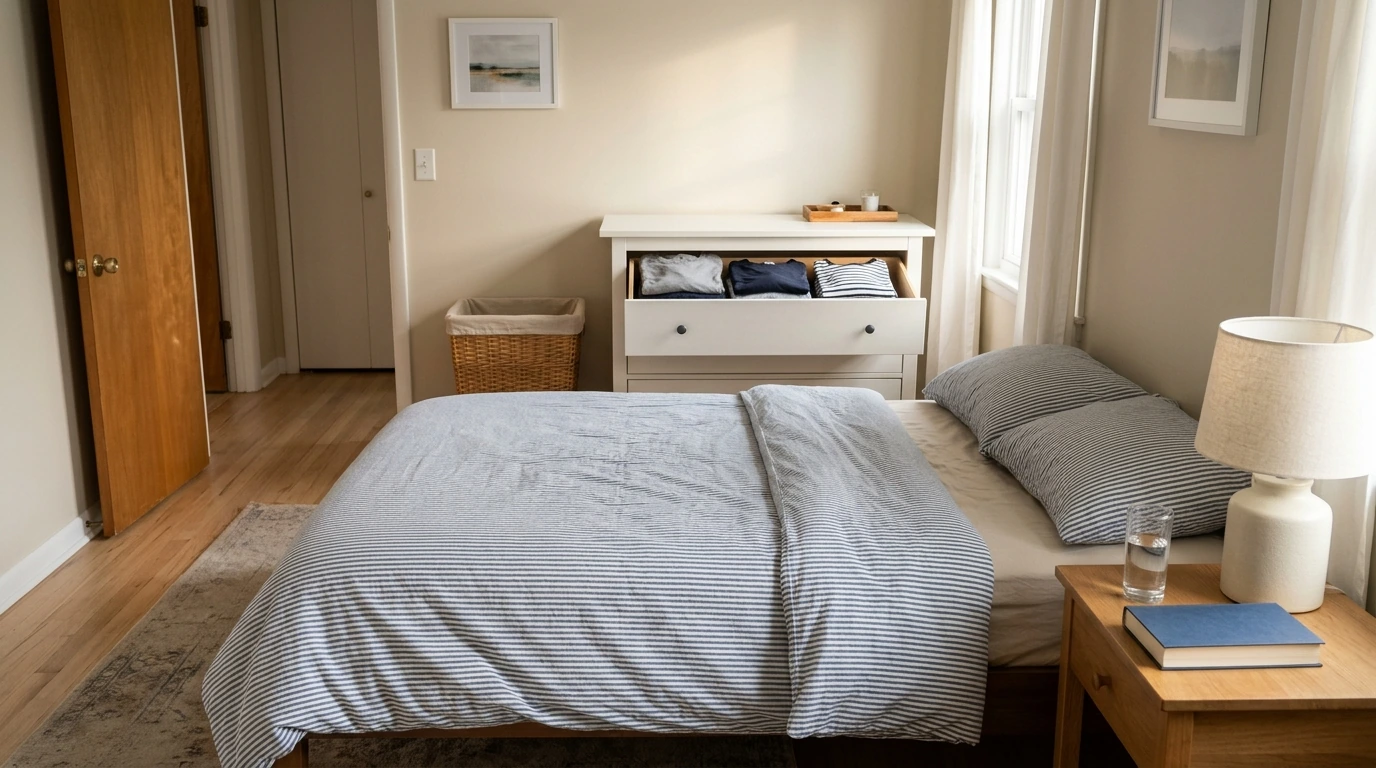
A calmer bedroom does not have to start with new furniture. Before you change how the room looks, clear what gets in the way of using it. Then give the belongings you keep a place that makes sense in your daily routine. Our minimalist bedroom makeover checklist works whether you have one afternoon or a few short sessions.
Start with the bedroom you actually need
What do you use your bedroom for? Sleeping and getting dressed may be its main jobs, but you might also read or work there. Name those activities before deciding what stays. A book beside the bed may be useful; a stack of papers you never address there may belong elsewhere.
Choose a finish line you can reach today, such as a clear nightstand and an unobstructed path to the bed. Take a quick look at the floor, visible surfaces, drawers, and closet, but do not pull everything out at once. Set up four destinations: keep here, move elsewhere, donate, and discard or recycle. Finish one small area before opening another.
| Step | Focus | Finish line |
|---|---|---|
| 1 | Clear | Walkways and the bed are free of loose items. |
| 2 | Sort | Items you use and want have a designated place. |
| 3 | Arrange | Daily essentials are easy to reach and put away. |
| 4 | Maintain | A short reset fits your normal routine. |
Clear the spaces that affect every day
Make the bed, then clear the floor and the top of the nightstand. You will see progress without committing to a full closet overhaul. Put dishes in the kitchen, paperwork where you handle it, and clothing in its proper place. If an item has no home yet, keep it in your “keep here” group until you can assign one.
At the bedside, keep what supports your actual routine: perhaps a lamp, water, and the book you are reading. You do not need to display every book you hope to read. If reading is something you want to make more room for, our Unlock the Page reading habit guide offers a separate way to work on that habit; the bedroom itself only needs space for what you are using now.
Next, sort clothing by type. One drawer of shirts is a manageable session; every drawer emptied onto the bed may not be. Put back pieces that fit, feel comfortable, and get worn. Set aside repairs and undecided items rather than letting them disappear into the same crowded drawer.
Give what remains an easy home
Store frequently used things where you naturally reach for them. A hamper near the spot where you change clothes is more useful than one that is difficult to access. Save higher shelves and less convenient storage for occasional or seasonal belongings. Keep the route between the door, bed, and closet clear so getting dressed does not require moving piles out of the way.
Use the drawers, shelves, and containers you already own before buying organizers. After sorting, you may find that they are enough. If a drawer is still crowded, identify what needs separating and measure the available space before choosing an insert. An organizer should make items easier to find and put away, not give you another place to keep things you do not use.
Leave some open surface for essentials. The goal is not an empty room: it is a room where setting down a glass of water does not start a new pile. For a portable way to track each stage, you can use our Minimalist Bedroom Makeover Checklist digital guide as you work through the space.
Make the room feel settled without filling it up
Work with your existing bedding and furniture first. Repeating a few colors or textures can make the room feel cohesive without a matching set. Choose a few decorative pieces you genuinely enjoy, and let some surfaces stay open. That breathing room makes daily use easier, too.
Check lighting against what you do in the room. You may want softer light near the bed and enough light where you get dressed. Curtains or shades should suit your preferences for privacy and daylight. Keep vents accessible, and follow care instructions when washing or arranging fabrics and furnishings. For broader guidance on indoor conditions, the EPA’s indoor air quality guidance covers ventilation and other practical considerations. The CDC’s sleep information is also a useful resource if you are thinking about the habits that surround bedtime.
Turn the makeover into a repeatable reset
Spend five minutes in the evening returning clothes, books, and small items to their places. If the same thing repeatedly lands in the wrong spot, its assigned home may be too inconvenient. Move it closer to where you use it rather than relying on a bigger cleanup later.
Every few weeks, check drawers and surfaces for anything that has crept back in. You can repeat the same sequence—clear, sort, arrange—on just one problem area. Our aim is not a perfectly empty bedroom. It is a space you can use comfortably and keep up without making organization a major project every weekend.
FAQ
Where should I start if my bedroom feels overwhelming?
Begin with one visible area, such as the bed or nightstand. Remove obvious trash and items that belong elsewhere, then decide what needs to stay within reach.
Do I need to buy organizers for a minimalist bedroom?
No. Sort your belongings and give them homes first. Buy an organizer only when you know what it needs to hold and have measured the space.
How do I keep the room from becoming cluttered again?
Use a short daily reset and make frequently used storage easy to access. Revisit any spot where clutter repeatedly collects.









Leave a comment