Wooden Cat Tower for Cats: Stable, Roomy & Built for Big Cats
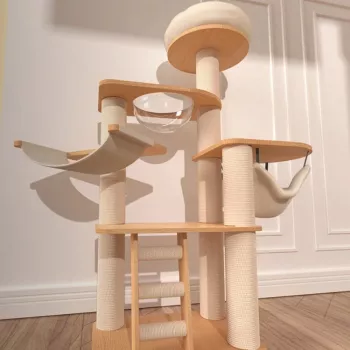
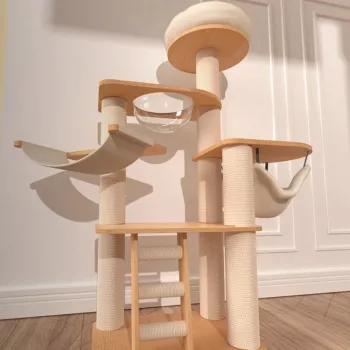
A Wooden Cat Tower for Cats That Holds Up to Real Climbing (Especially Bigger Bodies)
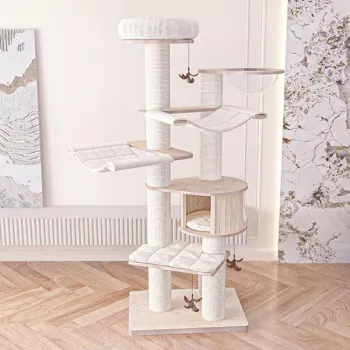
A wooden cat tower earns its place when it does three things at once: gives cats height, supports daily scratching and stretching, and stays stable through launches, landings, and zoomies. For larger cats—or multi-cat homes—structure matters even more. Below, our team breaks down what to look for in a wooden cat tower for cats, where to place it so it becomes part of everyday life, and how to keep it looking like “real furniture” even when your cat uses it hard.
Why a wooden cat tower changes how cats use their space
Wood tends to create a more furniture-like footprint, which helps a cat tower feel intentional in your room instead of temporary. That matters because cats use vertical territory to rest, observe, and regulate social distance—especially in multi-cat homes where “getting up and out of the way” can prevent friction.
A well-designed tower also creates predictable zones: a lounging spot, a lookout spot, and a scratch-and-stretch station. When those needs are met in one consistent location, many cats reduce random scratching elsewhere because they have a better option that’s always available. And for big cats, stability is confidence: secure platforms invite jumping and stretching without hesitation.
For a deeper look at cats’ environmental needs, you can review guidance from International Cat Care (iCatCare) and general behavior tips from the ASPCA.
The non-negotiables for a tower that feels solid for big cats
Base stability comes first
Choose a tower with a wide, substantial base that resists rocking during side-to-side movement. Big cats often “load” a platform unevenly when they pivot, and that’s when wobble teaches them the tower isn’t trustworthy.
Platform size should match real lounging
Your cat should be able to curl fully—with a little extra room. Larger bodies sprawl when they feel secure, and cramped perches can turn a tall tower into a tower that’s never used.
Landing spacing should match mobility
Step-to-step spacing matters. Closer, more forgiving transitions help heavier cats, seniors, and any cat that prefers climbing over leaping.
Scratch geometry needs to allow a full-body stretch
Cats don’t just scratch to “sharpen claws.” They scratch to extend shoulders and spine, leave scent marks, and reset tension. Short scratch zones can look nice but often fail the stretch test—aim for scratching areas that encourage a long reach.
Materials should hold up to repetition
Prioritize sturdy wood construction and scratching elements that stay appealing. If your cat scratches daily (most do), durability isn’t a bonus—it’s the point.
Quick fit check: match the tower to your home and your cat
Use this checklist to decide if a wooden cat tower will get daily use or become decorative. Placement also matters: you’ll get better results when the tower goes where your cat already likes to be—near family activity, a window, or a commonly traveled route.
| Your situation | What to prioritize | Why it matters |
|---|---|---|
| One large cat (Maine Coon, Ragdoll, etc.) | Extra-stable base + roomy platforms | Bigger bodies need stable landings and larger resting spots |
| Two or more cats | Multiple levels + more than one resting area | Reduces resource guarding and gives each cat an “upstairs” option |
| Cat scratches furniture corners | Tall scratch zones placed along traffic paths | Cats scratch to mark territory and stretch; placement is half the solution |
| Apartment or limited floor space | Vertical height with compact footprint | Gains vertical territory without taking over the room |
| Senior cat or reduced mobility | Gentle step spacing + easy access lower level | Cats still want height; they just need safer routes |
Where to place a wooden cat tower so it gets used every day
The “best” tower can underperform in the wrong spot. A few placements consistently earn daily use:
- Near a window: Natural “cat TV” makes the top level valuable and encourages longer lounging sessions.
- Adjacent to a social zone: Many cats prefer resting near you rather than isolated in a back room.
- Along a path: Cats patrol routes. A tower near a hallway edge or room entry becomes part of that routine.
- Avoid dead corners: If it’s far from where your cat already spends time, it stays optional.
- Keep it stable on the floor: Use a flat surface; add a grip pad if your flooring is slippery.
Helping cats actually choose the tower (without a battle)
Keeping a wooden cat tower clean and looking like furniture
Our picks: in-stock options you can add today
Wooden Cat Tower for Big Cats
Unlock the Page: Your Simple Guide to Getting Motivated to Read More Books (Digital Download)
A simple safety and comfort checklist before checkout
FAQ
Is a wooden cat tower good for big cats?
Yes—wooden towers can be a strong choice for big cats when they have a wide, stable base and platforms that allow comfortable lounging. Prioritize stability, roomy resting areas, and scratch zones that support full-body stretching.
Where should a cat tower go for the best daily use?
Place it where your cat already wants to be: near a window, near family activity, or along a common walking route. A great tower in an unused corner is often ignored.
How do you get a cat to use a new tower instead of the couch?
Make the tower more rewarding than the couch by adding a familiar blanket and using treats to encourage climbing. Position the scratch surface in the same territory as the couch corner your cat targets while temporarily limiting access to that scratch spot.








Leave a comment