5 Simple Ways to Close Open Shelves in Your Living Room
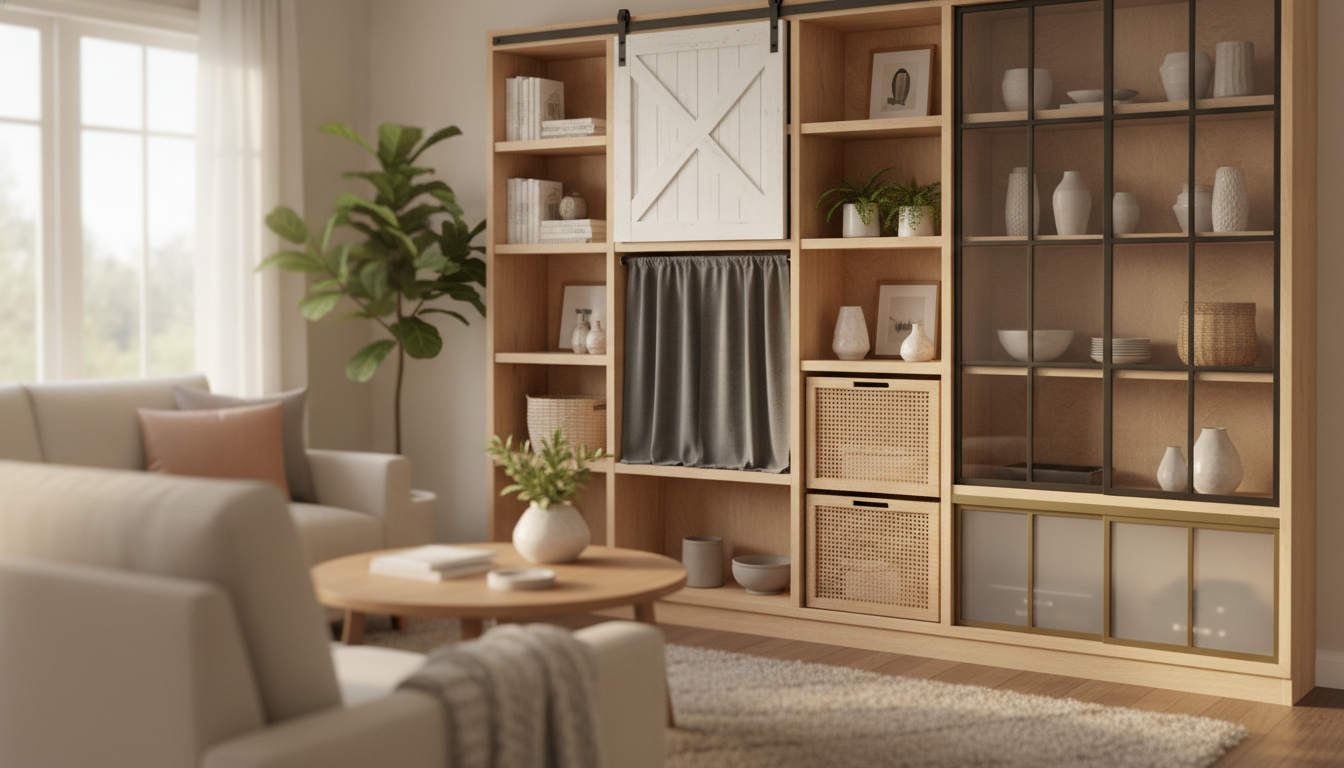
How to close open shelves in a living room?
Closing open shelves can make a living room feel calmer, more finished, and easier to maintain—especially if the shelves tend to collect a mix of books, décor, and everyday items. The best approach depends on whether you want a fully enclosed built-in look, a renter-friendly solution, or something flexible that still lets you access items quickly.
Best ways to close open shelves
Add cabinet doors to the existing shelving
If the shelves are sturdy and square, adding doors is the most “built-in” looking upgrade. Choose hinged doors for a traditional feel, or go with slab doors for a cleaner, modern style. Use concealed hinges for a seamless finish, and consider soft-close hardware to reduce noise in a shared living space.
Install sliding doors or a track system
Sliding panels work well when there isn’t clearance for swinging doors. They’re especially useful on wide shelving runs, and you can mix materials—wood, fluted acrylic, or glass—to control how much you want to hide. A simple top-and-bottom track keeps panels aligned and easier to operate.
Use baskets, bins, and lidded storage to “visually close” shelves
For a fast update, use matching baskets or fabric bins across the lower shelves and keep display items limited to the top. This doesn’t physically close the shelves, but it creates a cleaner, more uniform look while keeping clutter out of sight.
Hang a curtain or fabric panel
A tension rod or ceiling-mounted track can cover shelves with minimal tools. Choose a heavier fabric for better concealment, and keep the hem just above the floor for a tailored look. This is one of the easiest options for rentals or temporary changes.
Convert part of the unit into closed storage
Instead of closing everything, add doors to only the bottom half (or a couple of columns). This keeps the room from feeling too heavy while giving you hidden storage for electronics, kids’ items, or paperwork.
For step-by-step ideas and more design options, visit https://candorale.com/how-to-close-open-shelves-in-a-living-room/.
FAQ
How do you make open shelves look less cluttered?
Limit each shelf to a few larger items, repeat colors/materials, and group smaller pieces on trays. Add matching bins on lower shelves to hide loose items while keeping the overall look consistent.






Leave a comment