Safe Foods for Pet Birds: Daily Checklist & Avoid List
Feathered Feast: Safe Foods for Your Pet Bird — Ultimate Checklist for Bird Owners
A bird’s diet works best when it’s consistent, species-appropriate, and screened for common kitchen hazards. This checklist-style guide helps you plan balanced meals, add fresh variety safely, and avoid foods that can cause serious illness—even in small amounts. For species-specific guidance and nutrition checkups, it’s always smart to consult an avian veterinarian and use reputable references like the Association of Avian Veterinarians (AAV) Owner Resources.
Start with the non-negotiables
- Confirm species needs first. Parrots, budgies, cockatiels, canaries, finches, and softbills can have very different staple diets and tolerances.
- Base diet matters most. For many companion parrots, a high-quality pellet is commonly used as the primary foundation, with fresh foods as additions.
- Change food gradually. Sudden shifts can cause digestive upset or refusal to eat. Transition over 1–3 weeks by mixing small amounts of the new food into the old.
- Track intake. Weigh your bird regularly (especially small species) and watch droppings, appetite, and energy. Small changes can be early warning signs.
Daily plate framework (simple and repeatable)
- Staple portion: Keep a consistent base (often pellets for many parrots). Seed-only diets are commonly associated with nutrient gaps for many pet parrots.
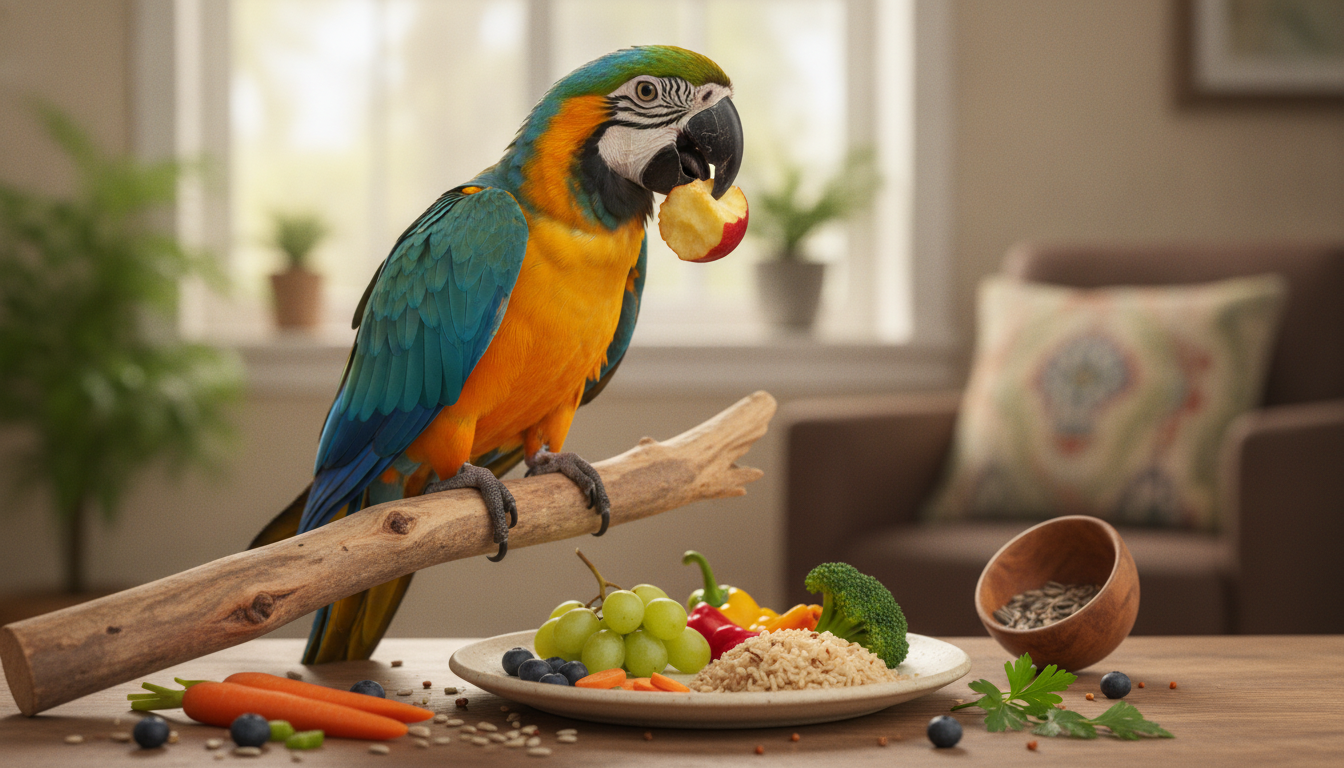
- Fresh portion: Rotate vegetables daily; offer fruit in smaller amounts due to sugar.
- Protein boosts (as appropriate): Some birds can have small amounts of cooked legumes or egg. Keep everything plain—no salt, butter, or seasoning.
- Treats: Keep “fun foods” occasional and small. Use them for foraging and training instead of free-feeding.
- Water: Refresh daily and wash bowls to reduce bacterial growth.
Safe foods checklist by category
Fresh foods are where many owners want variety—and where simple preparation details matter most. When in doubt, keep it plain and focus on whole foods. For deeper background on bird nutrition and husbandry, the Merck Veterinary Manual (Pet Birds) is a helpful reference.
Vegetables (often the top fresh-food priority)
Dark leafy greens and colorful vegetables are popular choices because they add fiber and a range of nutrients. Offer a mix of textures (crunchy, shredded, chopped) to encourage sampling.
Fruits
Fruit can be a nice rotation item, but it’s best as a smaller share of the fresh portion. Always remove pits and seeds where relevant, and keep portions modest.
Whole grains and starches
Choose plain cooked options with no salt, butter, oils, or sauces. Let foods cool completely before serving.
Legumes and plant proteins
Cook thoroughly and serve plain. Avoid raw or undercooked beans, which can be harmful.
Nuts and seeds
These are nutrient-dense and easy to overdo. Use tiny pieces for training rewards or foraging, and choose unsalted, unflavored options.
| Food group | Examples | How to serve | How often (general guideline) |
|---|---|---|---|
| Leafy greens | Kale, collards, romaine, arugula | Wash well; chop for small birds | Frequent rotation |
| Cruciferous & colorful veg | Broccoli, bell pepper, carrots, squash | Light steam or raw; bite-size pieces | Frequent rotation |
| Other veg | Green beans, cucumber, zucchini | Raw slices or small chunks | Frequent rotation |
| Fruits | Apple (no seeds), berries, mango, melon | Small portions; remove pits/seeds | Occasional to moderate |
| Whole grains | Brown rice, oats, quinoa | Cook plain; cool before serving | Moderate rotation |
| Legumes | Lentils, chickpeas, peas | Cook thoroughly; serve plain | Moderate rotation |
| Nuts/seeds | Almond, walnut, pumpkin seed (unsalted) | Tiny amounts; use for training/foraging | Small portions |
| Herbs | Cilantro, basil, parsley (small amounts) | Rinse; offer mixed into chop | Occasional |
Foods and ingredients to keep out of reach
- High-risk toxic foods: avocado; chocolate/cocoa; alcohol; caffeine (coffee/tea/energy drinks).
- Alliums: onion, garlic, chives, leeks (risk increases with amount and frequency; avoid as a rule).
- Fruit pits/seeds: apple seeds; stone-fruit pits (contain compounds that can be harmful if chewed/ingested).
- Xylitol (birch sugar): found in sugar-free gum/candy and some peanut butters; avoid completely.
- Salty, sugary, or fatty human foods: chips, fast food, desserts; can stress organs and displace nutrients.
- Moldy or spoiled food: even small amounts can be dangerous; remove fresh foods after a short feeding window.
If you’re unsure whether a houseplant is safe around your bird, the ASPCA Animal Poison Control plant lists can help you identify common risks.
Preparation, portions, and feeding routines that reduce risk
A simple 7-day rotation idea (customize to species)
Turn the checklist into a daily habit
- Post a “safe foods” list. Put it on the fridge and share it with anyone who feeds your bird (family, sitters).
- Use a weekly planning block. Shop once, prep once, portion into small containers, and rotate.
- Record reactions. Note new foods tried, stool changes, or refusals to fine-tune variety.
- Keep a ready reference. Save or print Feathered Feast: Safe Foods for Your Pet Bird – Ultimate Checklist for Bird Owners for quick daily decisions.
Helpful digital guides (in stock)
- Feathered Feast: Safe Foods for Your Pet Bird – Ultimate Checklist for Bird Owners (Digital download)
- Unlock the Page: Your Simple Guide to Getting Motivated to Read More Books (A simple routine-builder for anyone who likes habit trackers and checklists)
FAQ
How long can fresh fruits and vegetables stay in a bird’s cage?
Fresh produce is best removed within 2–4 hours, and sooner in hot or humid conditions. Promptly discard leftovers and wash bowls to reduce bacteria and mold risk.
Are seeds a complete diet for pet birds?
For many pet parrots, a seed-only diet is commonly linked with nutrient imbalances over time. A balanced plan is often built around a quality staple diet (frequently pellets for many parrots) plus fresh foods, tailored to species with guidance from an avian vet.
What should be done if a bird eats avocado or chocolate?
Contact an avian veterinarian or an animal poison helpline immediately—don’t wait for symptoms. Avoid home remedies, and be ready to share your bird’s species, size, and the approximate amount eaten.









Leave a comment