Kibbe Body Types Made Simple: Find Yours & Dress Better
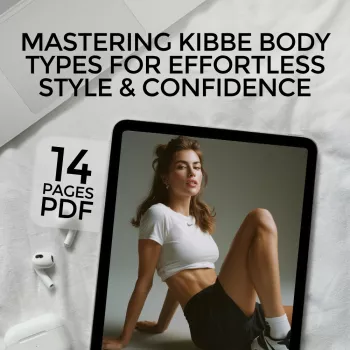
Mastering Kibbe Body Types: A Clear, Practical Guide to Dressing with Confidence
Personal style gets easier when outfits match the body’s natural lines. The Kibbe system is a framework for understanding shape, proportion, and overall impression so clothing choices feel intuitive instead of trial-and-error. This guide breaks down how the Kibbe types work, how to spot your own, and how to turn that insight into outfits that look intentional—without losing individuality. For more guidance, see What is my Kibbe Body Type and Personal Color Palette.
What the Kibbe System Measures (and What It Doesn’t)
Kibbe focuses on your overall “line” and yin/yang balance—think sharpness vs. softness, length vs. compactness, and structure vs. curve. Instead of isolating single features, it looks at what reads first when you see your full silhouette.
Most Kibbe analysis can be distilled into three building blocks:
- Vertical: your length impression (not just height)
- Width: frame presence, often through the shoulders/upper torso
- Curve: rounded flesh that fabric wants to wrap around
What it is not: a weight category, a “body flaw” checklist, or something you can determine by measurements alone. For the most reliable results, observe how fabric behaves on you—where garments pull, collapse, cling, or feel stiff.
Quick Clues: The Three Building Blocks
| Building block | What it looks like | Common clothing signal |
|---|---|---|
| Vertical | Long line; height or elongation reads first | Long coats, uninterrupted columns, and extended silhouettes look natural |
| Width | Blunt/broad frame at shoulders or upper torso | Relaxed structure, open necklines, and room through the upper body look balanced |
| Curve | Rounded shape from flesh; fabric wants to wrap | Waist emphasis, drape, and curved seams feel harmonious |
For a deeper background on terminology and how the system is commonly taught, see The Concept Wardrobe’s Kibbe overview and Kettlewell Colours’ guide to Kibbe.
A Simple Way to Start Finding Your Type
Typing gets easier when you swap perfectionism for a repeatable process. Use a neutral, head-to-toe mirror photo (simple outfit, hair pulled back, relaxed posture) and look at the whole silhouette first.
- Step 1: Check your vertical impression—does the eye read long, moderate, or compact?
- Step 2: Look for dominance: frame (width/shoulders), curve (rounded shaping), or overall balance.
- Step 3: Notice repeat “fail points”: shoulders pulling, waist disappearing, hems riding up/shortening, or fabric feeling stiff.
- Step 4: Test two opposites (structured vs. draped; cropped vs. elongated) and note which looks effortless.
Avoid over-focusing on isolated traits (like “I have wide hips, therefore…”). Kibbe works best when the full head-to-toe line is the focus.
At-Home Typing Checklist
| Observation | What to ask | What to test next |
|---|---|---|
| Silhouette | Does the body read long, moderate, or compact? | Try longline jacket vs. cropped jacket |
| Shoulders/upper frame | Do shoulders look blunt/broad, sharp, or delicate? | Try open neckline vs. high/closed neckline |
| Curve response | Does fabric naturally want to wrap and round? | Try draped top vs. crisp button-up |
| Best “default” look | Do clean lines or ornate softness feel more natural? | Try minimal column vs. detailed/romantic styling |
The Kibbe Families and Their Styling Priorities
Once you know whether vertical, width, curve—or balance—leads the conversation, the families become simpler. Each group has a priority that makes outfits look “right” faster.
- Dramatic (D/SD): Strong vertical; thrives with elongated lines, bold scale, and confident structure. Soft Dramatic adds curve accommodation.
- Natural (FN/SN): Width with relaxed strength; open necklines, easy drape, and unconfined silhouettes. Soft Natural adds softness and shaping.
- Classic (DC/SC): Balanced proportions; tailored simplicity, refined shapes, controlled detail. Soft Classic adds gentle curve and softness.
- Gamine (FG/SG): Compact with contrast; crisp fits, broken lines, playful detail. Soft Gamine adds softness and curve emphasis.
- Romantic (R/TR): Curve and softness; rounded shapes, waist emphasis, drape, ornate detail. Theatrical Romantic adds a sharper edge.
Family Snapshot: What to Prioritize First
| Family | Primary priority | Easy outfit formula |
|---|---|---|
| Dramatic | Vertical + sharpness | Long coat + sleek base + bold accessory |
| Natural | Width + ease | Relaxed jacket + open neckline + fluid trouser |
| Classic | Balance + refinement | Tailored blazer + straight pant + clean shoe |
| Gamine | Compact + contrast | Cropped jacket + high-waist bottom + detail pop |
| Romantic | Curve + waist emphasis | Wrap top + defined waist + soft skirt |
How to Translate Your Type into Daily Outfits
Fast Fixes When an Outfit Feels “Off”
| Problem | Likely mismatch | Quick adjustment |
|---|---|---|
| Looks heavy or overwhelmed | Too much fabric or detail for scale | Reduce volume, shorten hem, simplify accessories |
| Looks stiff or severe | Too much structure for softness/curve | Swap to drape, add waist definition, soften neckline |
| Looks shapeless | Not honoring vertical/waist/structure needs | Add length (vertical), add tailoring (structure), or add wrap (curve) |
| Looks fussy | Excess small details fighting clean lines | Consolidate details; choose one focal point |
Common Missteps That Make Typing Confusing
A Shortcut: Use a Guided Style Guide Instead of Guessing
- Mastering Kibbe Body Types for Effortless Style & Confidence (digital download)
- Zip It Up: The Ultimate Guide to Styling Your Zip-Up Hoodie Like a Pro
FAQ
Can a Kibbe type change with weight changes or age?
Your underlying line and bone structure stay consistent, but weight distribution and softness can shift how you prefer to accommodate curve, width, or structure. Focus on what your outfits need to honor now rather than chasing a new label.
What if two Kibbe types seem to fit at the same time?
Narrow it using the three building blocks (vertical, width, curve) and compare outfits that represent opposing accommodations. The best match is usually the one that solves the most repeat fit problems with the least effort.
Do Kibbe recommendations mean giving up trends?
Trends work when they’re adapted to your lines: choose the trend silhouette that matches your priority (vertical/width/curve) and tweak hem length, fabric weight, and detail scale. The goal is to wear what’s current in a way that still looks intentional on you.





Leave a comment